Showing posts with label Nueva Vizcaya. Show all posts

Thursday, March 17, 2011

The "ID" Story - March 23, 1993

Jose B. Sibayan's Japanese Issued ID
"For everything comes from God alone. Everything lives by his power, and everything is for his glory. To him be glory evermore." Romans 11:36 (The Book)
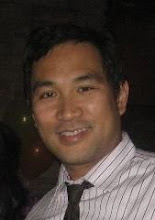
This ID saved my life and my family. It is dated September 1943 and bears the signature of Col. Tomas Domaoal who was born in Bangued, Abra. My picture was taken when I was still single before the outbreak of World War II. A seal of Major Sugiyama, a high ranking officer of the Japanese Kem Pie Tai (Military Policy Command), is stamped on the Japanese characters.

Major Sugiyama was the Superintendent of the Constabulary Academies 1, 2 & 3 in Manila during the Japanese occupation of the Philippines. His office was in Academy Bldg. No. 1 where I worked as Clerk-Stenographer and at the same time as Chief Clerk of Academies 1 & 2 located in Intramoros. He was my friend.

When Nana Iday, mother of Manang Susing, died in Manila in 1943, transportation from the City to the provinces was very difficult. Major Sugiyama game me a PASS to have the body of my late auntie shipped by train accompanied by Manong Pito, husband of Manang Loling, from Manila to Tagudin, Ilocos Sur.

This ID was issued to me when I became a Civil Service employee of the Constabulary Academy. I started as a janitor in Academy Bldg. No. 3 in Sampaloc, Manila; was promoted as a clerk there and later on transferrred to Intramoros after taking a course in the Government Employees Institute where my grade in Nippongo was 98%. In that Institute I mounted a platform every morning to lead the students in Radio Taiso or Physical Exercise before taking our breakfast after bowing towards the Rising Sun at six in the morning led by our Japanese Instructors.

Inside the Armory of the Academy in Intramoros, Manila, was an underground radio connected with the Headquarters of General MacArthur operated by T/Sgt. Hilarion de los Santos, a friend of mine. Hence, I was a member of the underground guerrilla movement relaying information received from American source. When Gen. MacArthur landed in Leyte, T/Sgt. de los Santos left the Academy with a truckload of rifles from the Armory and joined the guerrillas outside of Manila. Col. Domaoal and the other officers of the Academy were executed by the Japanese. At that time I was already in the province with my family.

Nana Ulli, Pat's mother, developed cancer of the cervix that was found beyond medical remedy in the Philippine General Hospital after the birth of Betty. The doctor's advice was for us to take her to the province where she can have better food as there was a grave shortage of food in the city. She also wanted to be treated by the "herbolarios" there.

To encourage the people of Manila to leave for the provinces, government employees were allowed to transfer as Food Production or Pacification agents with full pay and allowances in the provinces. I applied as a Food Production Agent in the province of Nueva Vizcaya where Nana Ulli had a sister married to a retired Constabulary soldier, Sgt. Major Hilario Bayabos. It took us one week to reach Bayombong, Nueva Vizcaya with me and my family consisting of Pat (my wife), Tony, Betty, and Boy (Rudy) riding on top of the driver's cab of a cargo truck. How we made it is another long story. we arrived there on my birthday, May 8, 1944.

When I reported to the Provincial Governor, Demetrio Quirino, for duty as Food Production Campaign Agent, he immediately assigned me as his Secretary after looking at my ID as Clerk-Stenographer. I did not have to go out to the municipalities and barrios to encourage the farmers to raise more vegetables or farm products.

In due time, Nana Ulli heard of a faith-healer in a barrio not very far from Bayombong who required us to buy some chicken and pork as food offerings for the healing rituals. The entire barrio people got invited. The house was full of people. Then the "healer" went into a trance and started dancing and chanting around her patient as we silently watched. All of a sudden we were startled with the appearance of a Japanese soldier with fixed bayonet ordering us out of the house which was surrounded by soldiers in fixed bayonets ready to spear anyone who made any false move. Only Nana Ulli, who could not move, was left.

We were lined up to be executed with soldiers ready to thrust their bayonets in front and at our back. I was carrying Tony and Pat was carrying Betty. Boy was clinging to my leg as I searched my pockets for my ID with my free hand.

I could see women fainting and others falling to the ground with knees buckling down shaking with fear while men can not control wetting their pants with trembling hands and legs. We were around thirty persons, excepting children, to be massacred. One word from the Japanese could have caused our death. He was in front of me with his sword, ready to give the signal, glittering menacingly in his hand. He was a Japanese Captain.

I bowed down before him and said: "Gomen Nasai" (pardon me) as I showed him my ID with a Constabulary badge attached to it. He took it, read it, and handed it back to me saying in Nippongo: "Interpret." Calling each man to him, he asked them his name, occupation, and where he lives. I interpreted his questions and the men answered by making signs about their occupation and pointing at their house down the hill.

He ordered soldiers to inspect and search every house in the barrio. When the soldiers returned empty-handed for guns, he ordered them back to attention and placed his sword in its scabbard while the soldiers unfixed their bayonets from their guns. Bowing to me he said: "Arigato." As I bowed, I said "Sayonara." When the barrio folks regained their composure they profusely gave me their appreciation and thanks by kissing my feet, saying: "Last week the Japs killed all nearby people of Barrio La Torre." I advised them that we should give our praises and thanksgiving to God.

We were suspected as guerrilla collaborators or a part of the hospital people that left the hospitals with the guerrillas several hours before our healing rituals. The Provincial Hospital was just across the hill of Barrio Busilak not far from the town of Bayombong where the Jap soldiers were stationed.

After the death of Nana Ulli, we witnessed with our own eyes the almost everyday execution of innocent men, women and children by the same Jap soldiers. Truckloads of passengers of confiscated vehicles passing Bayombong were killed daily.

The house where we evacuated was just across the fence of the school building converted into a barracks by the Japanese. Back of our house was the dry river bed of the Magat River where shallow graves were dug into which the bayoneted victims were thrown and covered while they were still moving. We watched with terrified eyes the merciless massacre from our kitchen window. It was a terrible daily nightmare!

If not for this "ID" we could have been innocent martyrs like those unfortunate victims of WAR! Praise the Lord.

JSB

Tuesday, February 1, 2011

History of My Life - Part J: Life in Bayombong, N.V.

As a third year student in the New Nueva Vizcaya Vocational H.S., with a new name and new classmates, I felt embarrassed when, during the first day roll call, I failed to respond when my new name was called until our teacher included my second name, Sibayan.  I blushed as everyone turned towards me not realizing the fact that I was, for the first time in 14 years being called Jose instead of Patrocinio.

My beautiful and very cute cousin, Eufemia “Mamin” Bravo, who was my classmate, explained to her friends my new name and told them that my nickname is “Siniong.”  And so my new acquaintances called me Siniong instead of Jose or “Peping.” 

Aside from the regular H.S. general subjects, I was enrolled in Poultry and Swine, as a vocational courses.  In that class I fell in love with Miguela (Ilay) Faralan who responded to my special attentions by slipping to me the answers to our daily Biology exams as I slipped to her the answers to our Algebra daily exams as we met each other in the exchange of classrooms.  Nobody noticed this secret understandin of ours.  She was the daughter of an Asst. Protestant Pastor and the sister-in-law of our vocational school teacher, Mr. Rimozin.  Ilay and I continued our friendship up to Manila when we were enrolled in college there after our graduation from H.S.

Although my classmates and other H.S. students looked at me with envy for being a bicycle owner and a relative of my rich cousin, riding a P.C. calesa, driven by a soldier on rainy days, they didn’t know the dark side of my life.  They didn’t know why I was limping after I got wet during a rain, riding my bike from school.  Because I only had one pair of shoes, I tried to dry them inside an oven.  When I got them they had shrunk.  I could hardly get my feet inside them.  When my uncle asked me why I was limping, I explained to him my problem.  He told me to get a pair of rubber shoes from a friend’s store.  At that time, men did not wear socks.  And so I wore first one pair of rubber shoes from June to the end of the school year without much chance of washing them.  The stink of those shoes and my feet served as anti-colds medicine.  As I ran my finger between my toes and smelled it, the cold germs got killed instantly with the bad odor!

They didn’t know that I had to wake up at 5 AM daily to go to town, bike on the stony road for more than two miles, to buy fresh bread from the bakery and then polish the floor with coconut husk before I took a bath.  They didn’t know that I had to pump water by hand every morning for bathing purposes.

They didn’t know that I had to wash the dishes after our meals and ran errands for my auntie and cousins with my bike.  They didn’t know that during our Senior Junior’s Prom I had to wear my oversized uncle’s shoes and coat and tie because I didn’t have any at all.  They didn’t know how much I wanted to give a Christmas gift or card to Ilay, my girlfriend, but I did not even have a centavo in my pocket.

They didn’t know how my self-pity brought tears to my eyes when I saw my uncle and his family going to a dance in the barracks across the street and they left me to take care of their young children.  And I sang the orphan’s song to myself.

But I got very much higher grades than my cousins and my uncle asked why.  My cousin’s close friends became my friends too and so I had Ilay, Olive, Edity and Jonnie closer to me than other H.S. students.  I had a chance to ride Edith on the bar of my bike one moonlit night around the town, but I had no nerve to make love with her for fear of breaking our friendship.  I continued my friendship with these ladies when they were taking nursing courses in Manila.  I was then a law student and working at the same time.

In Bayombong my uncle brought home from his expeditions in the jungles of the Sierra Madre Mountains a wild Ilongot boy and a naked black girl called “negrita”, the supposed aborigines of the Philippines.  They were wild like animals in the forest, but were tamed very easily.  We called the negrita Pogot and the Ilongot Tiadang.  At night they slept without blankets or mosquito nets, although it was very cold with plenty of mosquitoes.  They slept too soundly that we had to douse them with cold water to wake them up!

Tiadang can fire an arrow from his bow into the thick tall weeds of a forest and still be able to retrieve it back.  Pogot can climb up a tree as nimble as a monkey.  They were both very healthy, full of muscles, without excess fat on their bodies.  Their strength was unbelievable.  No amount of convincing them can make them take a bath.  They prefer to rub ashes on their bodies.  No doubt flies or mosquitoes avoid them!  They preferred to eat fruit and raw vegetables.

The elder sister of Mg. Maming, Bicensoceso (Susing) Bravo was crowned as Mrs. Philippines Veterans in 1933, as a candidate of the Constabulary of Nueva Vizcaya.  I almost got killed at a wooden bridge in Soleno, N.V. when I was holding to the side of a truck converted into a float riding my bike as the truck speeded homeward bound.  It’s good I was able to let go of the truck to avoid being pinned to the railings of the bridge.  It is also a wonder how I managed to balance myself at a great speed on the stony road without falling from my bike.  I guess my guardian angel saved me.  I did not notice I wet my pants until I arrived home.

After our school closed for summer vacation my uncle and auntie decided to send me back home with my bike to Bangued.  They took my younger brother in my place so that he can continue his studies in H.S.

History of My Life - Part I: After Mother's Death

I saw how lonely father became after mother’s death but he took his loss bravely with that usual smile for anything that happens.  He fell in love with a beautiful young employee of the La Flor de Pita tobacco factory of Don Juan Valera and got married.  That was when I was 2nd year in H.S. in 1933.

My uncle Lt. Bravo, visited us and suggested that I enroll in the H.S. in Bayombong, Nueva Vizcaya, his new Constabulary station.  Father agreed.  There I changed my name from Patrocinio to Jose upon my enrollment in 3rd yr H.S.  My wish to have a bicycle was fulfilled when my uncle gave me the new bicycle won by my auntie.  I used it to go to school.  During rainy days I rode in a horse-driven carriage (Calesa) driven by a Constabulary soldier to school with my cousin, Manang Maming, who was my classmate.

This is the turning point of my life, from “rags to riches”, from obscurity to popularity, from a low-down-trodden profile to a higher self esteem and to an awareness of my boyhood and manhood stage in life.  I felt differently, I felt like a real MAN!

But living with relatives is quite different from living with one’s own parents.  All my words and actions were guarded and not spontaneous.  I can’t be equal with my cousins in the eyes of their parents.  I and my older cousin, Manon Baddong, who like me is from another family, felt our treatment as those of servants by our uncle and aunt and their children.  We both come from poor families. 

Mg. Baddong’s father, Silvio, an older brother of Tata Anton, was the farmer in charge of Kinaber owned by our rich Uncle Anton.  Kinaber is a large tract of land bounded by mountains and rivers planted with rice, corn, coconut, cotton, sweet potatoes and vegetable plants.  Cows, pigs, chickens, ducks and horses are raised in this farm.