
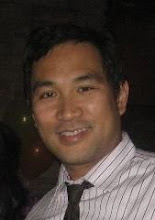
Today is Thanksgiving Day. I am on duty as County Officer (Security Guard) in The Landings Apartments at the corner of Sligh and Havana in Tampa.
The cold weather has set in, the breeze near the Egypt Lake is cold and has caused me to have sore throat when I came inside Room 301, my office, a store room of carpentry items. I ordered the sore throat to go away from me, as God's property, and I asked God, in the name of Jesus, to heal me. I claimed the promise of Jesus Christ that whatsoever you ask in my name, I will do it as true and concluded the Bible's quotation: "by his strength you were healed."
When I came back at 1 AM from my tour around the property, my "sore throat" was gone! Praise the Lord! "Resist the devil and it will flee from you," says the Holy Word! I just did that and it worked. Praise the Lord.
I just read the story "Douglas MacArthur: An American Soldier" published in the National Geographic magazine of March, 1992. Now I am recalling all those events that I have experienced related to him during WWII.
The first bill passed by Congress when the Philippines became a Commonwealth Government in 1935 with Manuel L. Quezon as the first President, was Act No. 1, "The National Defense Act" initiated by Gen. MacArthur. It called for the calling of all able bodied male citizens 20 years of age to be trained for military service.
Cadres were erected throughout the Philippines for trainees. At that time I was 17 years old and just graduated from H.S.
My uncle, Lt. Antonio Bravo, P.C., C.O., 39th P.C. Co., Kiangan, Ifugao, Mt. Province, wrote my father to let me go on vacation in Kiangan after receiving my letter containing our graduation program of the CSC, H.S., Bangued, Abra with me as an Honor Student.
This brought me to Kiangan. When I became 18 years old in May 1936, Tata Anton convinced me to enlist as a Constabulary soldier saying that whether I liked it or not, I'll become a soldier anyway when I reach 20 years of age as required by law. MacArthur authored this law, the National Defense Act No. 1 C. of the P.
Gen. M was then the Military Advisor of President Quezon. I witnessed in Camp Murphy, now Camp Aguinaldo, the presence of Gen. M reviewing the troops as Field Marshal when I became a soldier and was assigned in the Office Secretary General Staff, Headquarters, Philippine Army in 1936 after my enlistment as a Private in May 18, 1936 as orderly of Major General Paulino Santos and of Col. James B. Ord, U.S. Advisory staff member under Gen. M.
When Col. Ord died in a helicopter accident in Baguio, Major Dwight D. Eisenhower took took his place and occupied an air-conditioned office back of Gen. Santos' office in the Oriente Bldg., Binondo, Manila. That was in 1937 when I was promoted to the rank of Corporal. I was then the youngest Corporal in the entire Philippine Constabulary and Philippine Army at age 18 years only! Praise the Lord!
For this promotion, I am very thankful to God. As a Private my salary was 14 pesos/month ($7). For my being able to go to a night school to study Law with my salary of 22 pesos/month, as Corporal, I am very grateful to God.
For becoming a scholar with a grade above 85% in the Arellano Law School, I thank God.
For being a Cadet Captain in the National University ROTC (Reserve Officer Training Corps), I thank God.
For being a 3rd year law student in 1941 as a scholar, I thank God.
For marrying Pat on April 2, 1941, I thank God.
For surviving the Battle in Bataan, I thank God.
For surviving the Bataan Death March, I thank God.
For surviving as POW in Capras, I thank God.
For surviving near-death experiences in Bayombong, N.V. and during WWII, I thank God.
For returning to Manila in July 1945, I thank God.
For my promotion to Sergeant before the war, and to T. Sgt. during the war and to M. Sgt. after my return to military control in 1945, I thank God.
For my receipt of my late brother's back pay that enabled me to buy a house in Zamora St, Pandacan, Manila in 1946, I thank God.
For my promotion to 1st Lieutenant in 1949, I thank God.
For my promotion to Captain in 1950, I thank God.
For my becoming a Lawyer in 1950, I thank God.
For my survival in the fight against Huks (Communists) in Central Luzon in operations on Mt. Pinatubo from Sta. Cruz, Zambales, to Subic and Bataan as PRO and General Court Martial Officer, I thank God.
For my survival in fights vs. Huks in Central Luzon as S-2 (Intel. O.), 1st Bn. Combat Team, PA in 1951.
For my return to Manila as Instructor, P.C. Scool, Camp Crame in Quezon City in 1952.
For my wonderful assignments in Camp Crame from 1952 to 1957 living inside the Camp.
For my transfer as Instructor, PMA, Baguio.
For Tony's passing the PMA exam and becoming a Cadet in 1959 and graduation in 1963.
For Betty's passing the exam for accountants.
For my retirement in 1965 as Major, P.A.
For my job as Civic Action Liaison Officer, USOM (United States Operations Mission) in S. Vietnam and later on S___ Community Development O., 1965-67.
For returning to Manila in Nov. 1967 and missing the fearful Communist Tet Offensive in Vietnam in Jan. 1968.
For my job as Property O., USAID, U.S. Embassy in Manila giving away excess military property, 1968 - 70.
For my fulfillment of my last remaining ambition before I die and that is to see USA in Oct. 1971.
For relocating from Philadelphia to Tampa in 1973.
For my job with Chelsea Title & Gty. Co. in Tampa from 1973 - 1976.
For the approval of my U.S. citizenship in 1973.
For Pat and sons joining me in Tampa, Florida. Bobby and Jun in 1973 and Pat in 1974.
For the organization of PAAT in Nov. 24, 1975 on Thanksgiving Day at Lowry Park with me as President.
For the successful First Inaugural Ball of PAAT in Sheraton Hotel in 1976.
For our Balik-Bayan with Pat in 1976 and her healing from Kolam in Manila.
For our meeting with Pres. Ferdinand E. Marcos in Malacanang (me, Pat, & Joey) in 1976.
For our return to Tampa in 1976 with Pat.
For our stay with Betty in Arlington, N Virginia.
For our new VA financed property in Branch Ave, Tampa, Florida bought in 1975 with Pat.
For my job as Senior Paralegal O., Bay Area Legal Services in 1978-81.
For my retirement with SS pension in 1981.
For the sale of our property in March 1982.
For Pat going to rest on Easter Sunday, April 11, 1982 and 42 years of blissful, wonderful life together.
Praise the Lord! Thank you my God. Amen
JBS
Showing posts with label lolo. Show all posts
Showing posts with label lolo. Show all posts
Saturday, July 10, 2010


Friday, July 9, 2010
Spending Time With Lolo
I'm at my mother's house helping take care of my grandfather while my parents are out. He arrived here on Monday and it's been pretty tough on her. My uncles and cousins brought over a hospital bed earlier this week, so it's a little easier. He can't walk anymore and spends most of his time sleeping. It's hard to see him so frail. At this point, we're just trying to make him as comfortable as possible.
I've been going through his journal today and it's reassuring to hear his voice from the pages. It reminds me of how he used to be when I was young. I found an entry in his journal that seems appropriate for these times. I'll try to post it right after this.
I've been going through his journal today and it's reassuring to hear his voice from the pages. It reminds me of how he used to be when I was young. I found an entry in his journal that seems appropriate for these times. I'll try to post it right after this.
Monday, July 5, 2010
Jose B Sibayan back in Tampa
My grandfather arrived back in Tampa today. Uncles, aunts and cousins drove him back from Las Vegas since he was not cleared to fly back. He's not in the best of health. Please pray for him.
Sunday, August 30, 2009
Maria Sibayan - Memorial Service 8/31/2009
My grandfather's wife passed away a week ago today. We had the wake yesterday, the memorial service will be tomorrow at 6 pm at St Paul Catholic Church. Her obituary is here.
Thursday, July 23, 2009
History of My Life - Part F: Detour to 1970 – Miss Red Feather Part B
TAYUM was our first stop on our motorcade to the northern towns. Mayor Carino also delivered a DANIW for Jojo in the Provincial building during her reception in Bangued, had all the school children and town's people turned out to meet us. We were invited by the Catholic priest to see his new organ and have a sister play it for us. He also showed us a baptismal font made of hard wood around four feet in diameter and several hundred years old. At the balcony of the Catholic School Jojo received the people's acclaim and applause.
LAGANGILANG - had a banquet prepared by the school teachers in the Agricultural School Building. There was lechon, fried chicken, big fishes, all kinds of vegetables and fruits and cakes on the long table. The celebration stared as we boarded with our carsthe bamboo ferry across the Abra River. There I met some relatives and friends, the Lopez family, Nona Idang, Manag Oscor, wife of the Town Treasurer, Manong Pepeng Lopez.
DOLORES - was our next stop. They had floats and brass band ready that brought us to the town plaza. Jojo was asked to sing but she honored their request with a dance on the stage. congressman Barbero's home town showed a lot of progress. The bridge across the Abra River was not yet completed. He said that with the asphalted roads, one can now walk on high heels from Bangued to Dolores. My relatives there are Manang Ancion. Torqueza and his wife, Manang Yayang, my cousin.
SAN JUAN - was our next stop with my former Grade VII teacher, Mayor Balaaro, leading the people, students and everybody at the Plaza to welcome us with speeches and a short program. It was my first time to see San Juan although I sued to hear about it before during the Provincial Fair or town fiesta in Bangued.
PENAROBIA - was our first stop the following day. All the school children and townspeople lined the street to greet us. During their brief program I was asked to deliver a speech. I said that in this town were born many beautiful women whose names were Josefina, like Jojo. They were Josefina Tandingan, our cousin, wife of Col. Pedro Bersola. Josefina Abaoag, my former classmate in the Abra High School and Josefina Padaoil, who passed by our house every time she walked to and from the Catholic School.
BUCAY - was our next stop for the day. There, Mayor Torres, brother of Susana, my former classmate, led the town's welcome. They had a very well prepared program prepared following our town around the town. We were shown the Relics of the old Spanish Gate indicating that Bucay was formerly the Capital of Abra when it was a sub-province of Ilocos Sur. I did not know this before. That is why I thought of writing this story because by now or later, those reading it will find it entertaining and interesting and informative. I also did not know that the Abra River passed close to the town and was the means of transportation to Ilocos Sur then. There I met Peping Navarro, my relative. He gave us lots of sweet "santol".
SAN JOSE - was headed by my close friend Mayor Celedonio Javier. He was Physical Education Director in the PMA when I was a law instructor there in 1957 to 1965. He was our idol in the early thirties when he became the National Champion in "Sanggol". He met us with gong-beating, dancing, and almost naked natives or Igorots at the Abra River crossing. They prepared a very sumptuous banquet in the school house. He showed us his project of building a market place with Abra River stores. The big refrigerators he got from Clark Air Base through my help were used by him as storage for brooms and office files. He was a Mayor without pay because he donated his salary for the improvement of the town. He is a retired Major, AFP, like me.
PILAR and VILLAVICIOSA were our last scheduled visits as per agenda prepared by Fina Valera Aquino who escorted us around the Province. It was here where Don Juan Valera, Fina's father has a large land holding planted mostly with tabacco before the war. Hence, they had a tobacco factory called La Flor de Pita. It was here where we met the mother of Jojo's "yaya", Nena. Manang Ibang was hearing Jojo's name in her radio set and she said she wished to see her. Her wish came true. I've never been here before.
Everywhere we went food was always served. The typical Filipino hospitality was noticeable with lavish display of love, affection, praise and appreciation. Pat and I have been pinching ourselves to be sure that we were not dreaming. We were used by God to unite political enemies, unite all people of Abra. congressman Barbero said: WE ARE A POOR FOURTH CLASS PROVINCE BUT UNITED, WE HAVE BEATEN RICHER CITIES AND PROVINCES!
Jojo was invited by the Abra Valley College. Manong Pitong Borgonia, President, extolled the beauty of Jojo as the awakened Sleeping Beauty pointing at the mountains west of Bangued which have the contour of a sleeping maiden. I didn't realize that before. When I was asked to speak I said: Abra is blessed by God with Talent, Strength, and Beauty. Talent with President Borgonia as the youngest Principal Teacher during his time, strength with Major Javier as the Sanggol Champion in the early thirties, and beauty with Jojo as Miss Red Feather Philippines! They had a short program for us demonstrating a block busting with a sledge hammer on top of the stomach of a strog man. He also had picture taking by a professional photographer.
My alma mater, CSC (Colegio del Sagrado Corazon) now called College of the Sacred Heart Academy also invited us to a program where I was again asked to speak. I said, "I am reminded of the time I studied here and depicted the Life of Father Alonso in our graduation program. Now I am back as the father of our Miss Red Feather. You may also be interested to know that I am also the father of a PMA graduate who is now a ranking officer in the Philippine Navy. I also have a son who is a seminarian in Christ the King Seminary. I thank God for having blessed me and my wife with beautiful, wonderful and good children, seven in all!
The Seminary in Pidigan also became our host. There the seminarians gave us a short program. Later on our son, Ernesto, was assigned to this seminary.
The Jaycees of Bangued was also our host. Jojo delivered her speech which was later on broadcast on the radio. Doctor Paragganan who heard it came to see Jojo personally saying he admired her speech. I was asked how I came to have a beautiful daughter. I said, "When a husband and wife love each other so that the two become as ONE, then God will bless that marriage with beautiful children." Pat was also asked how she became the mother of a beautiful daughter like Jojo. She said, "All that I know is that God gave us our children who are all beautiful and I thank Him for these fruits of a lovely marriage."
We both witnessed for the glory of God! Praise the Lord!
The Jaycees of Vigan also became our last host after our tours in Abra. They met us with fireworks and a brass band at the Quirino Bridge then a motorcade around the town to various scenic and historical spots in Vigan. We saw the pottery factory in Bo Burmay, the Quirino home, the Crisologo Antiques, etc. Then we had a banquet after which we heard speeches by Chavit Singson, President, and others extolling the beauty of Jojo. In my speech I surprised them by revealing that my roots are in Barrio Kapangpangan, Vigan, where my father was born. And so Jojo is also a representative of Ilocos Sur in the beauty contest. Her victory is equally shared by the Vigan Jaycees just as it is shared by the Bangued Jaycees. They all agreed!
History of My Life - Part F: Detour to 1970 – Miss Red Feather Part A
It was there in 1970 when my daughter, Jocelyn, was being honored for winning the beauty contest as Miss Red Feather Philippines as Abra’s representative that I got an accolade from a beautiful daughter of our late neighbor, Ex-Governor Bienvenido Valera, saying: “Magpintas laketdin ta anacyon, Momon Siniong!”
It was the late Tata Benid, her father, who said to me in 1950, upon meeting me in Manila, “Ken abogado ka payen aya? Ania laketdin nga ragsak ni Insiongen no ada a biag itan!” “And so you are now a Captain and a lawyer. How happy would Insiong (my father) be if he were alive now!” That was the best compliment I ever received, especially considering the fact that when I was playing with his daughters as a child he told them not to play with my brother and I. He would drive us away from his yard because we belonged to a poor family, the sons of a slipper-maker while he was the “Presidente” or Mayor. Or maybe it was because we were quite dirty compared to his immaculately clean children who had maids to take care of them.
Ironically, he never knew that my late father wanted me to become a lawyer to recover property from him. Over the years his fence encroached closer and closer to our house posts until eventually a common boundary tree was beyond our reach from the fence. The same was also true of our back fence which was already several yards from a common well and an Acacia tree that, according to my mother, used to be a part of our fence. The owner of the property behind our house was the common-law wife of Tata Benid. I could have easily reclaimed our original boundary because I saw that when my grandfather sold the property to my parents, he was one of the witnesses to the Deed of Sale that contained the lot measurements. Instead of going to court, I just sold that property to avoid trouble with the neighbors.
I was very fortunate to be in Bangued during the opening ceremonies of Victoria Park and hear the speeches of prominent politicians mentioning the Forestry Director, Mr. Viado; Tobacco Director, Mr. Aquino; Don Quintin Paredes and others who contributed to the completion of the project. To me it was a dream come true, but it marked the turning point of the Paredes Political Dynasty for honoring a person instead of dedicating it in honor of the Virgin Mary or St James (Santiago), the Patron Saint of Bangued. From that point on the Barbero Political mill started grinding down the Paredes Political faction.
It was in the house of the late Congressman Carmelo Barbero where my daughter, Jocelyn, was brought to meet the prominent Abranians from Manila, headed by Professor Procopio Boromeo. The house on the side of Casamat Hill overlooks the town of Bangued and commands a good view of the entire community. There, Congressman Barbero asked Jojo to sing, Professor Boromeo, the foremost Pilipino guitarist, tried to accompany her, but could not get the right music because it was a new song entitled “I’ll never fall in love again.” So my daughter, who knew how to play the guitar, took the guitar from Professor Boromeo saying “Siac langen Tata,” and accompanied herself.
I was thinking of Ham Tuazon when Jojo was singing because he was madly in love with a Josephina Abaoag, our classmate. When she married another man, he never fell in love again. Ham was there and he told me that he would help with the candidacy of Jojo as the representative of Abra for Miss Red Feather Philippines. He didn’t know that Jojo’s baptismal name was Josefina.
Pat and I were Congressman Barbero’s honored guests and he placed us closest to him facing all the other guests that included all the prominent Abranians having a reunion in Bangued. We were met by the Treasurer of Abra Province at Tangadan who placed a lei of flowers around Jojo’s neck and escorted her to the High School building where the reunion was being held. From there we were brought to the house of Manong Meling (Carmelo Barbero) at the foot of the Casamata Hill. Pat and I were bursting with pride and joy as we never expected such a thing to happen in our humble lives at all.
The following day we had a picnic with all the famous Abranians in Borobor, the source of the water system of Bangued at the Alzate Park. We swam in the cool swimming pool where I alone used skin diving gear, to the amazement of all the guests, who, I guess, had never seen one before. Jojo was also an eye-opener and a great attraction in her swimsuit, especially in the pool on top of the Casamata Hill. The people of Bangued gathered to see the Miss Abra who was a candidate for Miss Red Feather Philippines. She was highly publicized in the papers and on the radio of Manila and Bangued, where she sang and delivered speeches. Those were glorious days for Pat and I, beyond our wildest dreams, being mentioned as the parents of Jojo, the most famous beauty of Abra Province, who united all political parties, clubs and people. Governor Patroning Seares predicted, “The first and only Jocelyn of Abra will win!” He was right.
When Jojo won the contest, Vice-Governor Aquino offered us the Victoria Park Guest House where the beds and mattresses I gave him were readied for our use as VIP’s. But we preferred to stay with Manang Salome and Dariang and Attorney Balleras who always welcomed us during our visits to Bangued.
One early morning we were awakened by the loud conversation of merchants boarding a bus about the parentage and ancestors of Miss Red Feather. We heard the names of ISIANG, INSIONG, SINIONG and PATRING mentioned. So we concluded that we were the talk of the town! Pat and I were both tickled to death. Everyone claimed that we were their relatives or friends, notwithstanding the fact that Pat and I were practically nobodies and unknown when we left Bangued years ago. When we returned with Miss Red Feather, we were greeted by school children and teachers from Tangadan, Pidigan, Palao and Bangued waving small flags and shouting “Welcome Miss Red Feather!” Then we heard the bells ringing, rockets bursting and sirens blowing as we entered the town. It was a triumphant return to Bangued!
Governor Seares asked everybody to pay respects to Jocelyn the First saying, “Agrobab tayo amin ken Reyna Jocelyn!” I saw the Congressman, the Governor, the Mayors and everybody bowing towards my daughter, Jojo, inside the Provincial Building! That was the highest point of recognition one could get. I guess nobody else ever received such an honor in Bangued ever. Jojo was wearing her crown and scepter as Queen Jocelyn the 1st with her tall trophy from the President of the Philippines.
Similar honors were shown in the towns of Abra where Jojo was presented to the public by their respective mayors.
It was the late Tata Benid, her father, who said to me in 1950, upon meeting me in Manila, “Ken abogado ka payen aya? Ania laketdin nga ragsak ni Insiongen no ada a biag itan!” “And so you are now a Captain and a lawyer. How happy would Insiong (my father) be if he were alive now!” That was the best compliment I ever received, especially considering the fact that when I was playing with his daughters as a child he told them not to play with my brother and I. He would drive us away from his yard because we belonged to a poor family, the sons of a slipper-maker while he was the “Presidente” or Mayor. Or maybe it was because we were quite dirty compared to his immaculately clean children who had maids to take care of them.
Ironically, he never knew that my late father wanted me to become a lawyer to recover property from him. Over the years his fence encroached closer and closer to our house posts until eventually a common boundary tree was beyond our reach from the fence. The same was also true of our back fence which was already several yards from a common well and an Acacia tree that, according to my mother, used to be a part of our fence. The owner of the property behind our house was the common-law wife of Tata Benid. I could have easily reclaimed our original boundary because I saw that when my grandfather sold the property to my parents, he was one of the witnesses to the Deed of Sale that contained the lot measurements. Instead of going to court, I just sold that property to avoid trouble with the neighbors.
I was very fortunate to be in Bangued during the opening ceremonies of Victoria Park and hear the speeches of prominent politicians mentioning the Forestry Director, Mr. Viado; Tobacco Director, Mr. Aquino; Don Quintin Paredes and others who contributed to the completion of the project. To me it was a dream come true, but it marked the turning point of the Paredes Political Dynasty for honoring a person instead of dedicating it in honor of the Virgin Mary or St James (Santiago), the Patron Saint of Bangued. From that point on the Barbero Political mill started grinding down the Paredes Political faction.
It was in the house of the late Congressman Carmelo Barbero where my daughter, Jocelyn, was brought to meet the prominent Abranians from Manila, headed by Professor Procopio Boromeo. The house on the side of Casamat Hill overlooks the town of Bangued and commands a good view of the entire community. There, Congressman Barbero asked Jojo to sing, Professor Boromeo, the foremost Pilipino guitarist, tried to accompany her, but could not get the right music because it was a new song entitled “I’ll never fall in love again.” So my daughter, who knew how to play the guitar, took the guitar from Professor Boromeo saying “Siac langen Tata,” and accompanied herself.
I was thinking of Ham Tuazon when Jojo was singing because he was madly in love with a Josephina Abaoag, our classmate. When she married another man, he never fell in love again. Ham was there and he told me that he would help with the candidacy of Jojo as the representative of Abra for Miss Red Feather Philippines. He didn’t know that Jojo’s baptismal name was Josefina.
Pat and I were Congressman Barbero’s honored guests and he placed us closest to him facing all the other guests that included all the prominent Abranians having a reunion in Bangued. We were met by the Treasurer of Abra Province at Tangadan who placed a lei of flowers around Jojo’s neck and escorted her to the High School building where the reunion was being held. From there we were brought to the house of Manong Meling (Carmelo Barbero) at the foot of the Casamata Hill. Pat and I were bursting with pride and joy as we never expected such a thing to happen in our humble lives at all.
The following day we had a picnic with all the famous Abranians in Borobor, the source of the water system of Bangued at the Alzate Park. We swam in the cool swimming pool where I alone used skin diving gear, to the amazement of all the guests, who, I guess, had never seen one before. Jojo was also an eye-opener and a great attraction in her swimsuit, especially in the pool on top of the Casamata Hill. The people of Bangued gathered to see the Miss Abra who was a candidate for Miss Red Feather Philippines. She was highly publicized in the papers and on the radio of Manila and Bangued, where she sang and delivered speeches. Those were glorious days for Pat and I, beyond our wildest dreams, being mentioned as the parents of Jojo, the most famous beauty of Abra Province, who united all political parties, clubs and people. Governor Patroning Seares predicted, “The first and only Jocelyn of Abra will win!” He was right.
When Jojo won the contest, Vice-Governor Aquino offered us the Victoria Park Guest House where the beds and mattresses I gave him were readied for our use as VIP’s. But we preferred to stay with Manang Salome and Dariang and Attorney Balleras who always welcomed us during our visits to Bangued.
One early morning we were awakened by the loud conversation of merchants boarding a bus about the parentage and ancestors of Miss Red Feather. We heard the names of ISIANG, INSIONG, SINIONG and PATRING mentioned. So we concluded that we were the talk of the town! Pat and I were both tickled to death. Everyone claimed that we were their relatives or friends, notwithstanding the fact that Pat and I were practically nobodies and unknown when we left Bangued years ago. When we returned with Miss Red Feather, we were greeted by school children and teachers from Tangadan, Pidigan, Palao and Bangued waving small flags and shouting “Welcome Miss Red Feather!” Then we heard the bells ringing, rockets bursting and sirens blowing as we entered the town. It was a triumphant return to Bangued!
Governor Seares asked everybody to pay respects to Jocelyn the First saying, “Agrobab tayo amin ken Reyna Jocelyn!” I saw the Congressman, the Governor, the Mayors and everybody bowing towards my daughter, Jojo, inside the Provincial Building! That was the highest point of recognition one could get. I guess nobody else ever received such an honor in Bangued ever. Jojo was wearing her crown and scepter as Queen Jocelyn the 1st with her tall trophy from the President of the Philippines.
Similar honors were shown in the towns of Abra where Jojo was presented to the public by their respective mayors.
Saturday, July 12, 2008
1939- How Pat & I Fell In Love
Editor's Note: I got a copy of my grandfather's diary from my aunt. (Thanks Tita Bing!) He wrote it in the mid-90's while he was doing security guard work around Tampa Bay and it's full of daily anecdotes and even more stories than the memoir that I'm working on now. This one is 304 handwritten pages and my brain goes a little numb and my fingers want to hide at the thought of transcribing it.
There are some good entries in here, and I plan to dip into it now and then to mix things up on the blog. He has very detailed remembrances of WWII in here and I plan to tackle those once I'm done with the memoir. For now, here's his side of the story going on right now from "Nanay" my grandmother's memoir that my sister is dutifully working on now.
One day while visiting Pat and her mother in a Boarding House opened by them in Azcarraga near UE (University of the East), I asked if she has already enrolled in school. She said "not yet because mother has not yet sold her sewing machine." I asked for her report card. She just finished 2nd year H.S. in the Nueva Vizcaya Vocational H.S. and she intended to enroll in the National Univ. H.S. Dept. in Sampaloc, Manila.
To my great amazement, I never saw a card like that before, which was full of 90+ grades with no grade below 85%. Her general average was around 95%. Almost perfect! She said she was correcting themes written by 3rd year students under Miss Veragara, her English teacher. I was surprised!
I told her that I will pay for her initial enrollment fees because it was just a few days when enrollment will be closed. Her mother agreed. The only amount needed was 5 pesos ($2.50) and she got enrolled. We were both very happy.
At that time in 1939 my girlfriend was Martha. My other girlfriends: Elay, Edith, Tonie and Olive had all graduated as nurses. I could no longer visit them in their hospital schools as before and we stopped communicating with each other.
God knows that my only interest in helping Pat was because of her high grades and I said: SAYANG if her intelligence will not be exploited. I could foresee that she would make good in school and have a bright future. And she was very eager to go to school!
On the first week of her schooling she took an exam for the H.S. Newsletter Editor-In-Chief. She was the first one who submitted her theme to the amazement of the aspirants, but hers was declared the winner by Leon O. Ty, a very famous newspaper writer.
This made Pat very popular considering the fact that nearly all the contestants were fourth year students. Her picture was in the papers as Editor-In-Chief! Her mother was very proud of her and all their boarders celebrated her victory. She was given scholarship benefits as a H.S. student and at the same time as a Normal School (College equivalent) student to become a teacher.
Many boys tried to date her. One of their boarders was after her. She told me all about her problems. I realized she would be in trouble and unable to continue her studies if she fell in love with somebody.
In the beginning I pretended to fall in love with her so that she would not fall in love with someone else. I tried to protect her future. She responded to my letters and ultimately we became sweethearts. Her beautifully written "Story of My Life" can better tell what actually happened, except the fact that I was just pretending to court her. God knows! JBS
Martha was a H.S. graduate and more beautiful than Pat. Although not as intelligent I suppose because she never answered my letters, nor encouraged me beyond the flick of her eyelashes and smile on her lips!
There was a point when I could pretend no longer. I gave up Martha and went full speed for PAT! This proves that LOVE can really grow. My favorite song was:
Love in bloom
This is the past dear,
A spark then a flame
The moon was to blame
The world was all in tune-
This is the present,
The flame still aglow
My darling and so-
I blame the stars and the moon
This is the future, you at my side
A groom and a bride,
A home for more than two
My beloved one, this is the past
The present and the future
I'm only living just
For you-
JBS
Our bundle of love letters from 1939 to 1941 can better tell the full love story between Pat and me. I've given each of my children copies of those same love letters.
Neither Pat or I had any objection to anybody seeing seeing these letters which are in the Abra Provincial Library as a part of my five volumes of the story of my life entitled "Anak Ti Abra." The Librarian, Mr. Bianes said that many read those love letters.
There are some good entries in here, and I plan to dip into it now and then to mix things up on the blog. He has very detailed remembrances of WWII in here and I plan to tackle those once I'm done with the memoir. For now, here's his side of the story going on right now from "Nanay" my grandmother's memoir that my sister is dutifully working on now.
One day while visiting Pat and her mother in a Boarding House opened by them in Azcarraga near UE (University of the East), I asked if she has already enrolled in school. She said "not yet because mother has not yet sold her sewing machine." I asked for her report card. She just finished 2nd year H.S. in the Nueva Vizcaya Vocational H.S. and she intended to enroll in the National Univ. H.S. Dept. in Sampaloc, Manila.
To my great amazement, I never saw a card like that before, which was full of 90+ grades with no grade below 85%. Her general average was around 95%. Almost perfect! She said she was correcting themes written by 3rd year students under Miss Veragara, her English teacher. I was surprised!
I told her that I will pay for her initial enrollment fees because it was just a few days when enrollment will be closed. Her mother agreed. The only amount needed was 5 pesos ($2.50) and she got enrolled. We were both very happy.
At that time in 1939 my girlfriend was Martha. My other girlfriends: Elay, Edith, Tonie and Olive had all graduated as nurses. I could no longer visit them in their hospital schools as before and we stopped communicating with each other.
God knows that my only interest in helping Pat was because of her high grades and I said: SAYANG if her intelligence will not be exploited. I could foresee that she would make good in school and have a bright future. And she was very eager to go to school!
On the first week of her schooling she took an exam for the H.S. Newsletter Editor-In-Chief. She was the first one who submitted her theme to the amazement of the aspirants, but hers was declared the winner by Leon O. Ty, a very famous newspaper writer.
This made Pat very popular considering the fact that nearly all the contestants were fourth year students. Her picture was in the papers as Editor-In-Chief! Her mother was very proud of her and all their boarders celebrated her victory. She was given scholarship benefits as a H.S. student and at the same time as a Normal School (College equivalent) student to become a teacher.
Many boys tried to date her. One of their boarders was after her. She told me all about her problems. I realized she would be in trouble and unable to continue her studies if she fell in love with somebody.
In the beginning I pretended to fall in love with her so that she would not fall in love with someone else. I tried to protect her future. She responded to my letters and ultimately we became sweethearts. Her beautifully written "Story of My Life" can better tell what actually happened, except the fact that I was just pretending to court her. God knows! JBS
Martha was a H.S. graduate and more beautiful than Pat. Although not as intelligent I suppose because she never answered my letters, nor encouraged me beyond the flick of her eyelashes and smile on her lips!
There was a point when I could pretend no longer. I gave up Martha and went full speed for PAT! This proves that LOVE can really grow. My favorite song was:
Love in bloom
This is the past dear,
A spark then a flame
The moon was to blame
The world was all in tune-
This is the present,
The flame still aglow
My darling and so-
I blame the stars and the moon
This is the future, you at my side
A groom and a bride,
A home for more than two
My beloved one, this is the past
The present and the future
I'm only living just
For you-
JBS
Our bundle of love letters from 1939 to 1941 can better tell the full love story between Pat and me. I've given each of my children copies of those same love letters.
Neither Pat or I had any objection to anybody seeing seeing these letters which are in the Abra Provincial Library as a part of my five volumes of the story of my life entitled "Anak Ti Abra." The Librarian, Mr. Bianes said that many read those love letters.
Wednesday, June 25, 2008
Nanay - Part 3
The following days were blank ones for me. I even became lax in my studies as all sorts of things came into my mind. First it was Vestre then Siniong. And added to this was our very serious financial condition. I contemplated to tell my mother about Siniong’s revelation of his love but I was also afraid. I didn’t know why. The following Sunday he came again and stayed for lunch. My mother must have noticed something because I could not act natural. The moment I saw him coming, something simply went thump-thump-thump in my chest and my hands and feet went cold. He did better, though. He simply said, “Hello, Pat.” and went to my mother. They went into a pow-wow until it was time for lunch and she had to invite him to dine with us.
Later that afternoon he invited my mother to go to the Luneta. He knew very well that she wanted so much to go there for a breath of sea air as our apartment was rather stuffy and hot. Then he matter-of-factly asked me if I wanted to go along. At first I intended to stay but then I realized that if I refused, my mother might make conclusions. So I went. I noticed Vestre’s envious eyes as we left the house. I knew he was at the window looking at us but I didn’t want to look up, because one of the reasons why I went with Siniong and mother ws that I didn’t want to be left alone in the house since my sister and her husband had gone out earlier.
It was around that time that my mother had to dismiss two boarders because they hadn’t paid for three months. We again looked for a smaller place and a cheaper one, too. We found one at Calle Gastambide which had only one advantage and it is its nearness to my school.
It was in this place that my bro-in-law left my sister for good. He said he was going for a vacation and also to visit his mother. My sister never thought that he would not come back anymore. One week after he left, my sister gave birth to a baby boy, October 22, 1939 to be exact, at the Mary Chiles Hospital. I wrote by brother-in-law about it and we expected him to come running home to his child. Weeks passed but he didn’t show up. Finally at the end of her rope, my sister bundled her son up and went to her husband’s home town. What took place there we never knew, but when she came back a week later, she was in tears and showed us a written agreement entered into by herself and her husband whose contents were to the effect that they were separated with mutual consent. My mother was sorry for the child but we were thankful because we got rid of an ingrate at last.
My birthday was approaching and as it neared I was getting restless because I promised Siniong he would have my answer on my birthday. I told him so when we went to an excursion in Montalban and he tagged along. I’ll never forget the trip. We were having that excursion in connection with our lessons in Biology so that we could gather specimens where there were plenty. We had our class organization sponsor it so we could hold a dance also. Siniong knew about it when my mother and I were discussing what I was to bring along and he arrived at home. He suggested that since we were holding the excursion on a Sunday, he could come along and he said he would take care of the “baon.” We shopped together that afternoon in Quiapo market for some pork chops, eggs and bread. I was glad that my mother didn’t suspect anything yet otherwise she would not have consented to our going together.
I was seeing Montalban for the first time. Seven Meralco buses brought us there and everyone was in high spirits. About noontime, we had gathered all the specimens we needed and the dancing began. The N.U. Band furnished the music. Siniong suggested that we have our lunch first since it was already almost twelve o’clock before we went to the dance hall. We selected a nice slab of white stone near the water’s edge for a table. I was getting nervous because the moment I dreaded most was nearing. I could have objected to our eating alone and could have suggested going with the others but I somehow didn’t. It seemed as though he had me in tow and whatever he suggested I readily agreed. I was wondering, too, because where I had been tom-boyish with other admirers; I was completely tame and coy with him. It may be because I trusted him so much and that I was quite sure, even then, that he would not do anything disagreeable to me. My chest was in a constant thump-thumping and I was grateful that he started only to press his question when we were almost through. It was then that I promised him that he would have my answer on my birthday, which was just a few days away.
The following morning when I went to school, I was surprised to see that the fortnightly issue of “The National” was already out. Most of the students in the lobby were all reading their copies. Then before I knew what happened, I was besieged by classmates and friends and they started pumping my hand in congratulations. I didn’t know what it was all about until someone showed a copy of the brand new “Junior National” (for the High School department) before my eyes. The headline read, “Junior Wins Editorship.” Then smaller letters, “Petite Patricia Enrile wins Essay Contest. She’s First Editor-In-Chief.”
I could not believe my eyes. I was so glad I almost cried. Then there was a sea of faces before me, Seniors mostly and Collegiates. They all shook my hand and congratulated me. The bell rang then, the crowd dispersed and, as I was about to go to my room, I saw Mr. Ty approaching. When he saw me he signaled me to wait for him. “Congratulations.” and he shook my hand. “Prepare a nice photo of yours for the next issue.” He instructed when we parted.
My first subject was English and as I entered the room I was met with a loud cheer by everyone. I stopped in my tracks and could not help the tears that came, tears of joy, at my achievement. Mrs. Ferrer, my English instructor led me to her table and she said, “We are proud of you, Patricia, very proud indeed. Keep up your good work, you’ll be somebody someday.”
I could not wait for the noon hour to strike so I could go home to bring my mother the good news. When it finally came, I hurriedly went inside the “National” offices, took several copies of the paper and hurried home. My mother shed tears when I told her. The boarders were very glad, too, and insisted that the occasion called for a celebration. In the afternoon, Siniong came. I knew he was very glad when he heard about it and he, too, offered his congratulations.
The following week was a happy one for me. Letters came from friends, Miss Inoncentes for one, knew about it through the Exchange column of their school organ “The La Union Tab.” Senia also wrote, and my classmates in Bayombong. Mr. Ferdan, instructor in the N.V.H.S. and also librarian wrote that he clipped the page of our paper and had it posted prominently in the library. In this same hectic week also came my birthday. All of a sudden I felt weak. I remembered my promise to Siniong and I still didn’t have my answer. But I had to keep my word so I wrote him a letter. I just told him about my doubts, my misgivings. I didn’t spare myself, I told him how inexperienced I was in love-affairs. On my birthday he came, but we didn’t have a chance to be alone. So I felt a little relieved because I was sure I would go to pieces if he pressed his question further.
History of My Life - Part E: Bangued Part 2
“History of My Life”
By Jose (Patrocinio) B. Sibayan
1990
E. Bangued, Part 2
The Provincial Governor, Don Virgilio Valera, always wore a white suit, white shoes and white PANAMA or straw hat from Panama. He also wore white hair as there was no dying of hair then. The same is also true with the Presidente (Mayor) Don Bienvenido Valera who was of Spanish ancestry, hence, had white skin like Don Virgilio. Don Quinten Paredes, the Congressman of Abra also wore all white clothes and was also white-skinned like the Valeras. They were taller than the ordinary Abranian and heavier in size. People adored and admired them.
The Police Chief wore khaki uniform with leggings and brass buttons like a P.C. officer. At that time he was my Tiong (Uncle) Binnong Benedito. He looked dignified and imposing. He had his own car. At night he blew his whistle at a certain hour and I heard whistles responding all around the town to show that his policemen were not sleeping. They were posted in the corner streets or strategic places patrolling the town.
The Justice of the Peace, Judge Rivas, was a thin person from another province who also loved to wear white suits and shoes and played tennis. When I sold my bicycle, I bought his tennis racket. I used to shine his shoes and the shoes of other members of his family in their house. He paid me very well.
The Provincial Fiscal, Fiscal Tomeldan, was a very short fat man who also played tennis. He was the father of my tennis partner in PMA, Captain Santiago Tomeldan. He was a very jolly person.
The Provincial Health Officer, Mr. Abecilla, enjoyed eating a lot. He was a very fat person. His son, Manong Gondino, who taught me chess, became a national chess champion.
The Provincial Treasurer, Mr. Chaves, lived in the house of Don Juan Valera, our neighbor across the street. Like the other officials, he also wore a white suit, white shoes, white necktie and used a white handkerchief. He used to arrive wet with sweat every afternoon after playing tennis in long white pants and white shirt and white rubber shoes. He had two sons, Johnny and Willie, of my age. Willie became a Captain like me and was also a radio announcer with his baritone voice. They had a green Dodge car that was kept well polished. Mr. Chaves was tall and lanky. His wife was beautiful.
I guess the reason the officials wore white attire is because of the Americans in the government service who wore all-white apparel and became the models. And so, even the High School teachers like Mr. Silverio Gutierrez and Mr. Honesto Brinyas were all in white.
High school students used a uniform of white shirts and khaki pants for boys and white blouse and khaki skirts for girls during my days in the early Thirties when I was 1st year and 2nd year in the Abra High School.
In my 3rd year in High School I left Bangued and studied in Bayombong, Nueva Vizcaya. It was there where I changed my name from Patrocinio to Jose. I returned to Bangued with a new name in 1934 and graduated as an Honor Student in 1935 from the Colegio del Sagrado Corazon High School of the Catholic Church.
After my graduation I left Bangued for Kiangan, Ifugao, Mountain Province where I worked as a Public Works Laborer and later on enlisted as a Private in the P.C. there. I visited Bangued when I became a Corporal, P.C. in 1937 during Holy Week. That was the last time I saw my birthplace before World War II. When I visited Bangued in 1945 I saw how badly devastated my home town was.
When I went up the Casamata Hill I could see the Abra River in Calaba across the barren town. Only a few structures like the church tower and municipal buildings did not get leveled to the ground. Not a single tall tree was left standing that I could see. It was caused by the carpet bombing by American planes during the Liberation of the Philippines from Japanese occupation.
When I was assigned as Instructor in the PMA in Baguio City in 1957 I had several chances to visit Bangued. Caimito trees took the place of the tamarind (salomagi), “sanguelas,” and “kamantiris” in our neighborhood. The roads were gradually paved with asphalt. Houses made of wood replaced the once bamboo and silag walls. More GI roofing glistened from house tops when I went up the Victoria Park in 1970. Bangued hads been transformed.
The Victoria Park is one of the most significant improvements in Bangued. I used to run up to the Casamata Hill with Felix Brillantes very early every morning and take a bath with the cool overflow of the tank which is now the swimming pool. When I was there the last time in 1970, I drove up the hill to take a dip in the swimming pool recalling my childhood days as I floated on the cool clear water from Borabor Stream. Then I watched the sun rise from the east with all its beauty and splendor as I used to do in my younger days when life was in its rising stage.
By Jose (Patrocinio) B. Sibayan
1990
E. Bangued, Part 2
The Provincial Governor, Don Virgilio Valera, always wore a white suit, white shoes and white PANAMA or straw hat from Panama. He also wore white hair as there was no dying of hair then. The same is also true with the Presidente (Mayor) Don Bienvenido Valera who was of Spanish ancestry, hence, had white skin like Don Virgilio. Don Quinten Paredes, the Congressman of Abra also wore all white clothes and was also white-skinned like the Valeras. They were taller than the ordinary Abranian and heavier in size. People adored and admired them.
The Police Chief wore khaki uniform with leggings and brass buttons like a P.C. officer. At that time he was my Tiong (Uncle) Binnong Benedito. He looked dignified and imposing. He had his own car. At night he blew his whistle at a certain hour and I heard whistles responding all around the town to show that his policemen were not sleeping. They were posted in the corner streets or strategic places patrolling the town.
The Justice of the Peace, Judge Rivas, was a thin person from another province who also loved to wear white suits and shoes and played tennis. When I sold my bicycle, I bought his tennis racket. I used to shine his shoes and the shoes of other members of his family in their house. He paid me very well.
The Provincial Fiscal, Fiscal Tomeldan, was a very short fat man who also played tennis. He was the father of my tennis partner in PMA, Captain Santiago Tomeldan. He was a very jolly person.
The Provincial Health Officer, Mr. Abecilla, enjoyed eating a lot. He was a very fat person. His son, Manong Gondino, who taught me chess, became a national chess champion.
The Provincial Treasurer, Mr. Chaves, lived in the house of Don Juan Valera, our neighbor across the street. Like the other officials, he also wore a white suit, white shoes, white necktie and used a white handkerchief. He used to arrive wet with sweat every afternoon after playing tennis in long white pants and white shirt and white rubber shoes. He had two sons, Johnny and Willie, of my age. Willie became a Captain like me and was also a radio announcer with his baritone voice. They had a green Dodge car that was kept well polished. Mr. Chaves was tall and lanky. His wife was beautiful.
I guess the reason the officials wore white attire is because of the Americans in the government service who wore all-white apparel and became the models. And so, even the High School teachers like Mr. Silverio Gutierrez and Mr. Honesto Brinyas were all in white.
High school students used a uniform of white shirts and khaki pants for boys and white blouse and khaki skirts for girls during my days in the early Thirties when I was 1st year and 2nd year in the Abra High School.
In my 3rd year in High School I left Bangued and studied in Bayombong, Nueva Vizcaya. It was there where I changed my name from Patrocinio to Jose. I returned to Bangued with a new name in 1934 and graduated as an Honor Student in 1935 from the Colegio del Sagrado Corazon High School of the Catholic Church.
After my graduation I left Bangued for Kiangan, Ifugao, Mountain Province where I worked as a Public Works Laborer and later on enlisted as a Private in the P.C. there. I visited Bangued when I became a Corporal, P.C. in 1937 during Holy Week. That was the last time I saw my birthplace before World War II. When I visited Bangued in 1945 I saw how badly devastated my home town was.
When I went up the Casamata Hill I could see the Abra River in Calaba across the barren town. Only a few structures like the church tower and municipal buildings did not get leveled to the ground. Not a single tall tree was left standing that I could see. It was caused by the carpet bombing by American planes during the Liberation of the Philippines from Japanese occupation.
When I was assigned as Instructor in the PMA in Baguio City in 1957 I had several chances to visit Bangued. Caimito trees took the place of the tamarind (salomagi), “sanguelas,” and “kamantiris” in our neighborhood. The roads were gradually paved with asphalt. Houses made of wood replaced the once bamboo and silag walls. More GI roofing glistened from house tops when I went up the Victoria Park in 1970. Bangued hads been transformed.
The Victoria Park is one of the most significant improvements in Bangued. I used to run up to the Casamata Hill with Felix Brillantes very early every morning and take a bath with the cool overflow of the tank which is now the swimming pool. When I was there the last time in 1970, I drove up the hill to take a dip in the swimming pool recalling my childhood days as I floated on the cool clear water from Borabor Stream. Then I watched the sun rise from the east with all its beauty and splendor as I used to do in my younger days when life was in its rising stage.
Thursday, June 19, 2008
Nanay - Part 1
By Patricia Enrile Sibayan
“Of all the music that reached farthest into Heaven,
It is the beating of a loving heart.”
- Jose B. Sibayan
Pat, my lovely darling, sublimated her personal ambitions into the caring of her family. She sacrificed her life for the love of her children and her husband. “Nanay” is truly a saint!
- Jose B. Sibayan
This story of my life was written by Nanay – Patricia Enrile Sibayan by hand. I just typed what she wrote with no corrections, word for word. This book is being sent to Tatay, Jose B. Sibayan Sr. and to all my brothers and sisters with lots of love in memory of our loving and dearest Nanay.
- Jojo Sibayan Lontok, December 10, 1985
I have just given birth to my sixth child, a bouncing baby boy at the “Clinica Lopez” and the urge to write the story of my life is so strong that I had to begin doing just that. My husband and I have named the new baby “Roberto” which was suggested by our oldest son, Tony, and we have nicknamed him “Bobby.”
Six children: Antonio 10, Liberty 8, Arsenia 6, Josefina 4, Ernesto 2, and Bobby, the new arrival. Watching our children has been instrumental in inspiring whatever dormant writing ability has been left in me and forced me to look back through the years to see myself just a child again and as carefree as any other child in the neighborhood.
I was born in the small town of Bangued, province of Abra, in northern Luzon. About my birth, I could not say much except that I came into this world, the youngest, among three love-children. I never knew the loving care of a father because he left us just a little after I was born, to marry another woman. I was too young then but relatives tell me how heart-broken my mother was and how she almost died. What made it most painful for her was maybe because our father didn’t bother to go to another town but married a neighbor who was supposed to be rich, and stayed right there in Bangued where my mother could meet them often times. It must have been terrible for my mother, but she had a stout heart and after a year or so, she began to forget him. Our oldest, a boy, died before I was born, that left two girls for my mother to take care of. My sister was four years my senior.
After what I call my mother’s tragedy, she became sickly and, added to her poor health; she still had to earn money for our upkeep. She was a seamstress and catered to the more solidly founded families of the locality. During months when her sewing was not so lucrative, she went from one barrio another, selling all sorts of household necessities. When I was about a year old an aunt of mine, the oldest, took me in tow because she took pity on my mother who was over burdened by the heavy responsibility of earning a living and raising two daughters. Good for me, it proved to be because my aunt did not have children, although she had been married for quite a time then.
My childhood days were just like any other girl’s. The only difference was my lack of some things that other children had because, although my aunt and uncle gave me all they could, they could not seem to give me enough, because they too were poor. Even my uncle tried to give me a father’s loving care and for that I am forever thankful. The only shadow that blighted my childhood days in their care was the fact that theirs was not a happy marriage. Individually, they were very good to me, but lucky was a day that would pass without a quarrel between them. There were nights when I would lie whimpering in our bamboo “papag” where I slept while I listened to their quarrels. Sometimes they would become so violent in their language that I would wish to run away and hide myself somewhere. One such time, I really did run away, to sit under our big guava tree which was quite a distance from the house. It was raining cats and dogs that night and very windy too. I was just preparing to go to sleep when all of a sudden I sensed that my uncle and aunt were quarreling. They were in the porch of the house. As the rain grew stronger so their voices rose higher until they were so furious with one another. When I could bear it no longer, I silently crept out of the house and proceeded to the back of our spacious backyard and sat under the guava tree.
I must have fallen asleep because I was roughly awakened by someone shaking my shoulder. When I opened my eyes I saw my aunt with a lantern in her hand. I stiffly got up and didn’t say a word. Neither did she, but I saw that she had been crying. The next morning I was down with a very high fever which lasted for four days. Most of the time I didn’t know what was happening around me and I had all sorts of dreadful dreams. When I got better, I was very thankful that my uncle and aunt seemed to be at peace with each other and no one could imagine how much I prayed to God that their peace would last.
I was thirteen years old when I finished the seventh grade as “First Honorable Mention.” I had been a candidate for valedictorian but I got sick for more than a month before the final exams and that proved to my disadvantage. My rating was 89%; the valedictorian and salutatorian rated 91% and 90% respectively. At the opening of the next school year my aunt refused to let me enter high school. I was disappointed beyond words. I convinced her in my own childish ways, but she would not give in. My mother heard about it and she approached my aunt about it and even promised that she would pay all my expenses. My aunt did not consent either and they quarreled. The only reason my aunt didn’t want me to go to high school was because she didn’t want me to have a chance to be followed by boys. To her way of thinking, I was just at the age when things like love-affairs were most dangerous. And she opined that going to high school was a means of making boys and girls meet and fall in love. I was dumb-founded, then, by her opinion, at that time I didn’t even know yet that such a thing as love existed between strangers. But no amount of persuasion would budge her.
I had to give up school that year and the next. I was morose and sad, especially when my former classmates would drop in to say hello. My heart was broken, I wanted to go to high school so much that after the second year of my non-schooling, I again began to convince my aunt to let me go back to school. Like the previous years, she refused. Then I made my own plans. I consulted mother and she suggested that since they were not in good terms with my aunt, we better move to another province. She planned to sell our house and all belongings then move to Bayombong, N. Vizcaya where a younger sister and her family were residing. I wrote to that aunt of mine and did not spare any details. I told her that I wanted very much to go to school and that I intended to leave my older aunt because she didn’t want us to go to their place and live with them and they even assured me that they’ll help mother see me through high school. My morale rose to a new high but was marred only by the thought of leaving my aunt. She was short-minded and old-fashioned in a lot of things, but I loved her too, like a mother.
So it came to pass that on August 1936, after spending a restless and tearful day, I sneaked from my aunt’s house and hid in a relative’s house to wait for the morning so I could take the first bus out of Bangued. My mother and sister were supposed to be on the bus and we would then proceed to Bayombong. Our plans were carried out smoothly but I could not sleep that night and was always thinking of my aunt. Several people came to the house where I was hiding and told the owners how I disappeared and how furious my aunt was. She also asked the help of the municipal police to locate me, but a cousin of mine, who was a member of the police force, knew of my plans. Instead of helping them locate me, he led them off to another section of town. I am not going to elaborate on my escape from the place of my birth because I don’t want to open old wounds. Suffice it to say that my mother, sister and I made it with not so much trouble and as the truck rumbled through the dusty roads to Bayombong, I was thanking my lucky stars for giving me a chance once more to go back to school.
I spent two years (first and second years) in the Nueva Vizcaya High School. My cousin-in-law, Dr. Sotero Torralba, was the one who enrolled me and with no difficulty. Right from the start, I seemed to strike a neat friendship with both my teachers and class mates. In no time, I was already a student leader. I grew to like my English 1 teacher (Miss Remedious Vergara) so much and after a while we were good friends. Our intimacy was such that she trusted me so much that she even made me correct themes (formal and informal) of her Second year students and left the grading of same at my discretion. I participated in all kinds of extra-curricular activities and was president of our class and also class representative to the Student Council. I took the Home Economics course and I made our department popular in the campus by my obtaining the highest ratings in departmental tests. That year I was also voted the sponsor of Company C of the NVHS Cadet Corps.
Summer vacation of that year, my mother took my sister and me for a sojourn to Manila. My sister had finished high school the previous year and had an eye on entering the Philippine Normal School. She made good, too, in the entrance exams, but through some twist of fate, she was not able to enter said school. That summer she intended to take up a secretarial course. We stayed in the house of Prof. Procopio Borromeo and his mother, who was my mother’s cousin, but later on we moved to Nana Sayon’s on Zobel Street. She was also a cousin of my mother’s and her husbnd, Tata Dolfo, was then a 1st Lt. in the Army.
That summer vacation was sort of memorable to me because it was during that time that I danced for the first time. It happened this way. Not far from Zobel Street was a boarding house which was managed by a childhood friend of my mother’s. All her boarders were male students and it happened that a friend of ours from Bayombong, (Asterio Saquing) was one of them. We were surprised when one afternoon, he visited us and brought along (Manong) Siniong (I called him that then.) He was the son of my mother’s best friend and second cousin in Bangued and my mother was so overjoyed at seeing him. When he left Bangued I was still a small tot and when I came out, he didn’t recognize me. We asked them to come again, which they did quite often, and on Siniong’s birthday (May 8th) he invited my sister and me to join him to a pilgrimage to Antipolo. To make a foursome, he asked Asterio to come along. It was there in Antipolo that I danced for the first time – with Asterio as instructor.
History of My Life - Part C: Sanitation
Editor's Warning!
If you're uncomfortable hearing about sanitary conditions in a Third World country in the 1920's do not continue reading! My grandfather goes into pretty graphic detail here: disease, parasites, toilet habits, the whole 9 yards. I would not recommend reading this anywhere around mealtime. It does get better towards the end when running water, culverts, and sanitary methods are introduced.
“History of My Life”
by Jose (Patrocinio) B. Sibayan
1990
C. Sanitation
Health conditions during the early Twenties were very poor and unhealthy. Toilet was not a usual part of a house, much less bathrooms. A house was usually elevated several feet above the ground to accommodate the pigs, dogs and chickens to scratch and pick up the scrap food dropped down between the bamboo-slat floors. We moved our bowels under the trees or along the road into the canal. We used bamboo sticks or corn cobs to wipe our anus. Pigs were always around ready to gobble up the human waste.
1. Toilet and Bath
At the time we went to fetch water from the nearest water well, we also had the urge to move our bowels first before taking a bath. While taking a bath, we also washed our clothes and dried them under the sun.
Later on, during the late Twenties an ANTIPOLO system of toilets was compulsory for every home. It consisted of digging a deep pit to be covered at all times when not in use. An ordinance was passed warning pig or animal owners to tie up or keep their animals from roaming around the streets. When the water system of Bangued was installed, homes had a part of the home called BANGSAL where you could take a bath. The Antipolo was dug at the furthest corner of the property, connected with a bamboo bridge or a pathway in the yard. Flies usually swarmed around as the toilet pit got filled with worms or maggots. Homes had no screens, and so the flies crawled and swarmed everywhere.
2. Sickness – Dysentery
Intestinal diseases were prevalent and caused a lot of deaths, especially in infants and children. I was in Lagangilang one day watching a procession of coffins brought to the cemetery. They had a dysentery epidemic there. The source of drinking water was the Abra River. We had a houseboy around my age, Valentin by name, who suffered stomach ache one night and suddenly died.
3. PTB - Pulmonary Tuberculosis
I saw people sick of PTB spitting out of their window while the flies swarmed around and chickens picking up the bloody mucous. But we did not know any better. I had not seen germs through a microscope at that time. Education later brought about better sanitation in town.
4. Mosquitoes and Bed Bugs
We slept as a family under a large mosquito net. When we woke up, we would kill the blood-filled mosquitoes trapped inside the net. We also had a lot of bed us that hide inside the pillows, blankets and mosquito net ends. And so every waking day was a bloody day!
5. Mites
Inside the yard were lots of fleas and ants. There was even a belief that red ants going inside the house is a sign of good luck. Inside the chicken coop under the house were tiny white mites called OLMOG. They also sucked blood and caused a lot of itch!
6. Lice
During my childhood days everyone, especially women, had lice. The common pastime of women was to sit on the ladder and remove each other’s lice while they chatted or gossiped or told old housewives tales!
7. Panateng - Colds & Coughs
Around the month of December or during the rainy season, colds were an ordinary experience for everybody. The already greenish mucous of some kids could be seen slowly coming down their nose until they inhale it back again instead of wiping it away. That is why we have a riddle that says: “NO OMOLOG AGALALADOD, NO OMOLI GOLPE! And we have a joke: INTAN AGNATNATENG; - ALIS PANTENG. Nobody covered their mouth wile coughing then or even sneezing. We induced sneezing by pricking the nose to relieve the congestion. I used to locate my father in the plaza among the crowd by tracing his successive SAY-A or short coughs.
8. Kamata – Sore Eyes
During summer we developed sore eyes as a matter of course, like a part of life. We have a joke: INTAN IDIAY CASAMATTA; - ALIS KAMATA. The flies helped the spread of sore eyes too as they flew from one person’s eye to another like bees from flower to flower. The only remedy we had was fresh milk from a mother’s breast or AGUA BORICADA. Sometimes a whole class of school children had sore eyes because no isolation was enforced. Kids who had sore eyes even chased others to touch their fingers on their classmate’s eyes to infect them too.
9. Daringu – Ngo – Nosebleed
Nose bleeds were common during dry season. Our remedy was to raise the opposite arm and press the bleeding nose, or soak our head with water. It was a general belief that anybody getting sick was because of bad air hitting them, called DAKES NGA ANGIN. There was some truth to it because of the polluted air full of viruses and germs.
10. Gadnil – Skin Diseases
Skin diseases were very common on account of the fleas, mosquitoes, bed bugs, ants, mites, etc. that caused infections. Scratching with dirty finger nails was common among uneducated children and people like us then. Hence our legs, arms and other parts of our body were afflicted with sores. We had no medicine available so we resorted to having our sores, especially on our legs, licked by our dogs until the scabs were removed, thereby leaving scars or PIGLAT on our legs. We just took it for granted that those sores or skin diseases would eventually dry up or heal without putting any medicine on them because we did not know any better. We had no dispensary to go to and our schools had no nurse or anybody to look after our diseases. I had a sad experience of being unkindly whipped by my Grade Two teacher on my leg because I could not go by the beat of the music when we were being taught to dance for a program. She hit one of my leg sores and it started bleeding. I cried, ran home and didn’t want to go back to school anymore. I went back to school, but I no longer wanted to be a participant in the dances.
11. Sakit Ti Chan – Stomach Aches
Stomach aches were experienced frequently by children because of eating fly-ridden food or eating with dirty hands or drinking polluted water. The common remedies were placing hot ashes wrapped with a piece of cloth on the stomach. We had no hot-water bags then. If that didn’t work, they roasted either santol, guava, or “sarguelas,” whatever is the suspected “culprit” until it is burned black into charcoal. Then it was placed into a cup of water to be used as “aqua-tiempo” or a drinking potion. It worked!
12. Pokga & Labatiba – Fever
Fever or “GORIGOR” occurred now and then due to overexposure to rain, or heat, or infection, or contagious disease. The usual remedy is purgative with ACETE DE CASTOR in the morning; sweating with lots of blankets the whole day and an enema or LABATIBA in the late afternoon. Usually the fever is gone the following day. On the third day good food consisting of chicken soup and soft-boiled rice (LUGAO) is served to the recuperating patient. Then a chicken is roasted wrapped with banana leaves served with rice.
13. Agas – Cuts
Cuts or “SUGAT” are usually infected because of the unsanitary conditions and ignorance in treating wounds properly. I cut my left thumb almost in half when I was about five years old. The only remedy was petroleum or GAS from our oil pump and the wound was wrapped with a piece of cloth taken from our dish towel or NISNIS that remained unwashed for several days. The infected wound lasted many months and I still have the scar up to this date. Sometimes, if we get hurt while playing we ran to a nearby fence to get a leaf of TAWATAWA to let its sap drop into our wound. If the blood is flowing we would wash it with our saliva by sucking the blood. If the wound is on our foot or leg, we washed the blood by urinating on it. If there is a “mabungay” tree, we got its leaves, pounded them into a poultice and applied it on the wound.
14. Bollo – Sprains or Disclocations
Sprains and dislocations were usually treated by a local MANGILOT or masseur like Tata Kinio Busuego, our neighbor. He had coconut oil for massaging the part of the body affected. If a splint is needed, he would get a branch of TAWATAWA, skin it and use the bark to wrap around the elbow or leg after giving the broken limb a good massage accompanied by the anguish and shouts of pain by the patient. I saw how my brother was treated following his fall from a fence he climbed and broke his left elbow. His arm was never restored to its original shape and he had a crooked arm called in Ilocano “Singkol” or KUMANG in Tagalog.
15. Ngipen – Toothaches
Toothaches usually ended up with a pulled tooth by means of a string or pliers without anesthesia. If the tooth had a hole in it, salt or tobacco was inserted to deaden the pain. I had an aching molar with a swollen gum and could no longer stand the pain when I was about 11 years old. My cousin, T-Sgt. Crisanto Bravo, a PRACTICANTE of the Dental Service, P.C., extracted it without anesthesia and I almost collapsed with pain. I had a tooth that had a hole in it and a local dentist, Tata Sidong, drilled it without anesthesia and I was yelling and struggling with pain! Thanks to anesthesia!
16. Sakit Ti Olo – Headaches
Headaches were treated, before aspirin became available, by hand massage or soaking it with cold water. Banana leaf was wrapped around the head to absorb the heat. Handkerchiefs were tied around the head to deaden the pain. Tender leaf of TAWATAWA or ACHLETE also served the purpose if tender leaves of banana were not available. A friend of my grandfather who used to read the PASSION with him died of swallowing a bottle of CAFIASPIRINA just because he thought that relief from headache can be done instantly – and it did! People then were ignorant about medicine. Maybe that is why GAMOT or Ilocano for poison is the Tagalog word for medicine? The Tagalogs were closer to civilization than the Ilocanos in the north of the Philippines far from Manila.
17. Sakit Ti Karabokob – Tonsilitis
Tonsilitis was treated by gargling with salt water or strong vinegar or both. These were the only available remedies for tonsillitis when I was a child. I had to endure the pain as a “part of growing” and prayed that it would soon be over. It was accompanied by high fever and swelling and the inability to swallow anything. Sometimes a hot towel compress was applied to the throat to relieve the pain and reduce the swelling.
18. Dogol – Boil
Boils caused an ugly scar and was a very painful disease. My uncle, Antonio Bravo (Lt. P.C.) had a boil scar as big as a 50 cent coin on his right temple and so did the cousin of Pat, Manong Picoy. I had mine on my right upper leg joint, or groin, and what a throbbing pain it gave me. The scar is still there. It was made to burst with an application of Malunggay leaves pounded into a paste and applied on top of the boil. I was immobilized for the duration of my Christmas vacation. My mother sat at my bedside comforting my while I agonized.
19. Bobon – Water
Water was either from the rain or ground well during my childhood days. We gathered rain water for drinking and hauled by means of bamboo called BAYENGYEN water from the well for cooking and washing purposes. During the time we were at the well, we would wash our clothes and take a bath. The water well we drew our water from was near the stream that passed near the PAGPARTIAN down a trail strewn with “camachili” thorns and bamboo thorns that pricked our bare feet. Infection eventually followed and so I had to walk on my hell or on my toe, limping until the infection is healed by itself after a long time.
20. Casamata Water Reservoir – Gripo
The greatest thing that happened in Bangued during my childhood days was the digging of the reservoir in Casamata hill. After school hours I was there picking up pieces of limestone to be polished into marbles. Then the clean fresh water was piped into the houses and brought better health, comfort, and cleanliness to us. Taking a bath directly under the faucet was a very enjoyable experience. Drinking with cupped hands directly from the faucet was a very refreshing treat. Gone were the pricked feet, the swollen shoulders, the BAYENGYENG and the laborious drawing of water from the well. What a relief! Gone too were the frequent stomach disorders and loose bowel movements and infections and bad body odor and unsanitary kitchen and toilet!
21. Kalsada – Canals and Culverts
Canals and culverts were unknown until the streets were paved with Abra River stones followed by canals for drainage purposes. Culverts or IMBORNAL were also built on road intersections. The water puddles on the roads were dried up easily and dumping of garbage in the road holes stopped. The “Imbornal” became a place for meetings of neighbors and young boys to sit down to tell stories or gossip about others or to brag about one’s adventures or watch girls walking home from school. Pigs were no longer allowed to roam on the streets. Men played SIPA on road intersections and children played hide and seek by going inside the culverts or “Imbornal.” The town looked better after those muddy road holes were covered by stones. But a ride in a Caromata over those stony roads was just a terribly earth-shaking experience! Walking on those fist-sized stones to school during hot summer days was like hell! But everything was a part of life and we did not know any better.
22. Electricidad
Electricity was another improvement in the sleepy valley of Bangued. Previous to the Banez Electric Plant, only the Church Convent had electric lights. The priests and nuns enjoyed all the comforts of a modern life with their electric generator. With the electrification of Bangued around the early Thirties, we could study and read our lessons at home better instead of using the flickering gas lamps. We only used the current for lighting purposes because it was only available at night time. But my classmate and best friend, Tony Banez and his family, had all the comforts of a refrigerator, electric range and even movies at home. He used to give me apples and grapes from their refrigerator. With electric lights at road intersections, the men played SIPA and had cock-fighting even at night. Children did not have to wait for the moon-light to play at night.
I remember when there was no street light and we had to carry a PAROL or kerosene lamp to walk in the streets at night. Then big kerosene lamps were installed on lamp posts at street corners. I remember when I short circuited our line by putting a coin inside our electric bulb socket. It caused a big commotion because people were busy preparing for the procession of Holy Friday. They never traced who did it. With the Electric Plant we no longer bought ice from Vigan because an Ice Plant was built also. Ice cream and halo halo became cheaper. Thanks to Don Urbano Banez.
23. Kanen – Food
Food consisted of daily rice, fish sauce or caviar called “patis” or “bag-goong”, “dinaguan” or blood pudding, “chicharon” or fried crispy pig skin and “dineng-deng” or soup consisting of vegetables with a bit of fish or meat. In the morning people who had money went to the PAGPARTIAN or slaughterhouse near SINAPINGAN to buy LUMO-LUMO consisting of pig entrails with a piece of coagulated blood and a small piece of meat called LUMO or tender loin. This is cooked with a spice called KUTCHAY that makes the soup smell appetizing. The richer people can buy cow’s meat and more expensive pieces of meat in the PAGPARTIAN before the vendors transferred their meat to the TINDAAN or market east of the Catholic Church.
During the town fiesta or on weddings or birthdays we had INASAR or LECHON or roasted pig. The piglets were usually roasted inside the oven of the Bayabas Bakery in the eastern part of the town.
On Sundays, when a cow is butchered, people who can afford it usually cooked PUCHERO, a soup with potatoes, bananas, cabbage, and cow’s meat with fat on it.
We had “adobo” or fried pork with a lot of spices, and LONGANISA or sausage, homemade. But during my childhood days we had a neighbor who had three children and their food consisted of only rice and “bagong” or BAGGOONG in which they dipped the rice molded into a ball with their hands. One of them sat in front of their yard along the street asking alms from passersby. The other went about town asking alms with the help of one of our neighbor’s children. The father’s name was Gorio, and his wife was Ineza.
If you're uncomfortable hearing about sanitary conditions in a Third World country in the 1920's do not continue reading! My grandfather goes into pretty graphic detail here: disease, parasites, toilet habits, the whole 9 yards. I would not recommend reading this anywhere around mealtime. It does get better towards the end when running water, culverts, and sanitary methods are introduced.
“History of My Life”
by Jose (Patrocinio) B. Sibayan
1990
C. Sanitation
Health conditions during the early Twenties were very poor and unhealthy. Toilet was not a usual part of a house, much less bathrooms. A house was usually elevated several feet above the ground to accommodate the pigs, dogs and chickens to scratch and pick up the scrap food dropped down between the bamboo-slat floors. We moved our bowels under the trees or along the road into the canal. We used bamboo sticks or corn cobs to wipe our anus. Pigs were always around ready to gobble up the human waste.
1. Toilet and Bath
At the time we went to fetch water from the nearest water well, we also had the urge to move our bowels first before taking a bath. While taking a bath, we also washed our clothes and dried them under the sun.
Later on, during the late Twenties an ANTIPOLO system of toilets was compulsory for every home. It consisted of digging a deep pit to be covered at all times when not in use. An ordinance was passed warning pig or animal owners to tie up or keep their animals from roaming around the streets. When the water system of Bangued was installed, homes had a part of the home called BANGSAL where you could take a bath. The Antipolo was dug at the furthest corner of the property, connected with a bamboo bridge or a pathway in the yard. Flies usually swarmed around as the toilet pit got filled with worms or maggots. Homes had no screens, and so the flies crawled and swarmed everywhere.
2. Sickness – Dysentery
Intestinal diseases were prevalent and caused a lot of deaths, especially in infants and children. I was in Lagangilang one day watching a procession of coffins brought to the cemetery. They had a dysentery epidemic there. The source of drinking water was the Abra River. We had a houseboy around my age, Valentin by name, who suffered stomach ache one night and suddenly died.
3. PTB - Pulmonary Tuberculosis
I saw people sick of PTB spitting out of their window while the flies swarmed around and chickens picking up the bloody mucous. But we did not know any better. I had not seen germs through a microscope at that time. Education later brought about better sanitation in town.
4. Mosquitoes and Bed Bugs
We slept as a family under a large mosquito net. When we woke up, we would kill the blood-filled mosquitoes trapped inside the net. We also had a lot of bed us that hide inside the pillows, blankets and mosquito net ends. And so every waking day was a bloody day!
5. Mites
Inside the yard were lots of fleas and ants. There was even a belief that red ants going inside the house is a sign of good luck. Inside the chicken coop under the house were tiny white mites called OLMOG. They also sucked blood and caused a lot of itch!
6. Lice
During my childhood days everyone, especially women, had lice. The common pastime of women was to sit on the ladder and remove each other’s lice while they chatted or gossiped or told old housewives tales!
7. Panateng - Colds & Coughs
Around the month of December or during the rainy season, colds were an ordinary experience for everybody. The already greenish mucous of some kids could be seen slowly coming down their nose until they inhale it back again instead of wiping it away. That is why we have a riddle that says: “NO OMOLOG AGALALADOD, NO OMOLI GOLPE! And we have a joke: INTAN AGNATNATENG; - ALIS PANTENG. Nobody covered their mouth wile coughing then or even sneezing. We induced sneezing by pricking the nose to relieve the congestion. I used to locate my father in the plaza among the crowd by tracing his successive SAY-A or short coughs.
8. Kamata – Sore Eyes
During summer we developed sore eyes as a matter of course, like a part of life. We have a joke: INTAN IDIAY CASAMATTA; - ALIS KAMATA. The flies helped the spread of sore eyes too as they flew from one person’s eye to another like bees from flower to flower. The only remedy we had was fresh milk from a mother’s breast or AGUA BORICADA. Sometimes a whole class of school children had sore eyes because no isolation was enforced. Kids who had sore eyes even chased others to touch their fingers on their classmate’s eyes to infect them too.
9. Daringu – Ngo – Nosebleed
Nose bleeds were common during dry season. Our remedy was to raise the opposite arm and press the bleeding nose, or soak our head with water. It was a general belief that anybody getting sick was because of bad air hitting them, called DAKES NGA ANGIN. There was some truth to it because of the polluted air full of viruses and germs.
10. Gadnil – Skin Diseases
Skin diseases were very common on account of the fleas, mosquitoes, bed bugs, ants, mites, etc. that caused infections. Scratching with dirty finger nails was common among uneducated children and people like us then. Hence our legs, arms and other parts of our body were afflicted with sores. We had no medicine available so we resorted to having our sores, especially on our legs, licked by our dogs until the scabs were removed, thereby leaving scars or PIGLAT on our legs. We just took it for granted that those sores or skin diseases would eventually dry up or heal without putting any medicine on them because we did not know any better. We had no dispensary to go to and our schools had no nurse or anybody to look after our diseases. I had a sad experience of being unkindly whipped by my Grade Two teacher on my leg because I could not go by the beat of the music when we were being taught to dance for a program. She hit one of my leg sores and it started bleeding. I cried, ran home and didn’t want to go back to school anymore. I went back to school, but I no longer wanted to be a participant in the dances.
11. Sakit Ti Chan – Stomach Aches
Stomach aches were experienced frequently by children because of eating fly-ridden food or eating with dirty hands or drinking polluted water. The common remedies were placing hot ashes wrapped with a piece of cloth on the stomach. We had no hot-water bags then. If that didn’t work, they roasted either santol, guava, or “sarguelas,” whatever is the suspected “culprit” until it is burned black into charcoal. Then it was placed into a cup of water to be used as “aqua-tiempo” or a drinking potion. It worked!
12. Pokga & Labatiba – Fever
Fever or “GORIGOR” occurred now and then due to overexposure to rain, or heat, or infection, or contagious disease. The usual remedy is purgative with ACETE DE CASTOR in the morning; sweating with lots of blankets the whole day and an enema or LABATIBA in the late afternoon. Usually the fever is gone the following day. On the third day good food consisting of chicken soup and soft-boiled rice (LUGAO) is served to the recuperating patient. Then a chicken is roasted wrapped with banana leaves served with rice.
13. Agas – Cuts
Cuts or “SUGAT” are usually infected because of the unsanitary conditions and ignorance in treating wounds properly. I cut my left thumb almost in half when I was about five years old. The only remedy was petroleum or GAS from our oil pump and the wound was wrapped with a piece of cloth taken from our dish towel or NISNIS that remained unwashed for several days. The infected wound lasted many months and I still have the scar up to this date. Sometimes, if we get hurt while playing we ran to a nearby fence to get a leaf of TAWATAWA to let its sap drop into our wound. If the blood is flowing we would wash it with our saliva by sucking the blood. If the wound is on our foot or leg, we washed the blood by urinating on it. If there is a “mabungay” tree, we got its leaves, pounded them into a poultice and applied it on the wound.
14. Bollo – Sprains or Disclocations
Sprains and dislocations were usually treated by a local MANGILOT or masseur like Tata Kinio Busuego, our neighbor. He had coconut oil for massaging the part of the body affected. If a splint is needed, he would get a branch of TAWATAWA, skin it and use the bark to wrap around the elbow or leg after giving the broken limb a good massage accompanied by the anguish and shouts of pain by the patient. I saw how my brother was treated following his fall from a fence he climbed and broke his left elbow. His arm was never restored to its original shape and he had a crooked arm called in Ilocano “Singkol” or KUMANG in Tagalog.
15. Ngipen – Toothaches
Toothaches usually ended up with a pulled tooth by means of a string or pliers without anesthesia. If the tooth had a hole in it, salt or tobacco was inserted to deaden the pain. I had an aching molar with a swollen gum and could no longer stand the pain when I was about 11 years old. My cousin, T-Sgt. Crisanto Bravo, a PRACTICANTE of the Dental Service, P.C., extracted it without anesthesia and I almost collapsed with pain. I had a tooth that had a hole in it and a local dentist, Tata Sidong, drilled it without anesthesia and I was yelling and struggling with pain! Thanks to anesthesia!
16. Sakit Ti Olo – Headaches
Headaches were treated, before aspirin became available, by hand massage or soaking it with cold water. Banana leaf was wrapped around the head to absorb the heat. Handkerchiefs were tied around the head to deaden the pain. Tender leaf of TAWATAWA or ACHLETE also served the purpose if tender leaves of banana were not available. A friend of my grandfather who used to read the PASSION with him died of swallowing a bottle of CAFIASPIRINA just because he thought that relief from headache can be done instantly – and it did! People then were ignorant about medicine. Maybe that is why GAMOT or Ilocano for poison is the Tagalog word for medicine? The Tagalogs were closer to civilization than the Ilocanos in the north of the Philippines far from Manila.
17. Sakit Ti Karabokob – Tonsilitis
Tonsilitis was treated by gargling with salt water or strong vinegar or both. These were the only available remedies for tonsillitis when I was a child. I had to endure the pain as a “part of growing” and prayed that it would soon be over. It was accompanied by high fever and swelling and the inability to swallow anything. Sometimes a hot towel compress was applied to the throat to relieve the pain and reduce the swelling.
18. Dogol – Boil
Boils caused an ugly scar and was a very painful disease. My uncle, Antonio Bravo (Lt. P.C.) had a boil scar as big as a 50 cent coin on his right temple and so did the cousin of Pat, Manong Picoy. I had mine on my right upper leg joint, or groin, and what a throbbing pain it gave me. The scar is still there. It was made to burst with an application of Malunggay leaves pounded into a paste and applied on top of the boil. I was immobilized for the duration of my Christmas vacation. My mother sat at my bedside comforting my while I agonized.
19. Bobon – Water
Water was either from the rain or ground well during my childhood days. We gathered rain water for drinking and hauled by means of bamboo called BAYENGYEN water from the well for cooking and washing purposes. During the time we were at the well, we would wash our clothes and take a bath. The water well we drew our water from was near the stream that passed near the PAGPARTIAN down a trail strewn with “camachili” thorns and bamboo thorns that pricked our bare feet. Infection eventually followed and so I had to walk on my hell or on my toe, limping until the infection is healed by itself after a long time.
20. Casamata Water Reservoir – Gripo
The greatest thing that happened in Bangued during my childhood days was the digging of the reservoir in Casamata hill. After school hours I was there picking up pieces of limestone to be polished into marbles. Then the clean fresh water was piped into the houses and brought better health, comfort, and cleanliness to us. Taking a bath directly under the faucet was a very enjoyable experience. Drinking with cupped hands directly from the faucet was a very refreshing treat. Gone were the pricked feet, the swollen shoulders, the BAYENGYENG and the laborious drawing of water from the well. What a relief! Gone too were the frequent stomach disorders and loose bowel movements and infections and bad body odor and unsanitary kitchen and toilet!
21. Kalsada – Canals and Culverts
Canals and culverts were unknown until the streets were paved with Abra River stones followed by canals for drainage purposes. Culverts or IMBORNAL were also built on road intersections. The water puddles on the roads were dried up easily and dumping of garbage in the road holes stopped. The “Imbornal” became a place for meetings of neighbors and young boys to sit down to tell stories or gossip about others or to brag about one’s adventures or watch girls walking home from school. Pigs were no longer allowed to roam on the streets. Men played SIPA on road intersections and children played hide and seek by going inside the culverts or “Imbornal.” The town looked better after those muddy road holes were covered by stones. But a ride in a Caromata over those stony roads was just a terribly earth-shaking experience! Walking on those fist-sized stones to school during hot summer days was like hell! But everything was a part of life and we did not know any better.
22. Electricidad
Electricity was another improvement in the sleepy valley of Bangued. Previous to the Banez Electric Plant, only the Church Convent had electric lights. The priests and nuns enjoyed all the comforts of a modern life with their electric generator. With the electrification of Bangued around the early Thirties, we could study and read our lessons at home better instead of using the flickering gas lamps. We only used the current for lighting purposes because it was only available at night time. But my classmate and best friend, Tony Banez and his family, had all the comforts of a refrigerator, electric range and even movies at home. He used to give me apples and grapes from their refrigerator. With electric lights at road intersections, the men played SIPA and had cock-fighting even at night. Children did not have to wait for the moon-light to play at night.
I remember when there was no street light and we had to carry a PAROL or kerosene lamp to walk in the streets at night. Then big kerosene lamps were installed on lamp posts at street corners. I remember when I short circuited our line by putting a coin inside our electric bulb socket. It caused a big commotion because people were busy preparing for the procession of Holy Friday. They never traced who did it. With the Electric Plant we no longer bought ice from Vigan because an Ice Plant was built also. Ice cream and halo halo became cheaper. Thanks to Don Urbano Banez.
23. Kanen – Food
Food consisted of daily rice, fish sauce or caviar called “patis” or “bag-goong”, “dinaguan” or blood pudding, “chicharon” or fried crispy pig skin and “dineng-deng” or soup consisting of vegetables with a bit of fish or meat. In the morning people who had money went to the PAGPARTIAN or slaughterhouse near SINAPINGAN to buy LUMO-LUMO consisting of pig entrails with a piece of coagulated blood and a small piece of meat called LUMO or tender loin. This is cooked with a spice called KUTCHAY that makes the soup smell appetizing. The richer people can buy cow’s meat and more expensive pieces of meat in the PAGPARTIAN before the vendors transferred their meat to the TINDAAN or market east of the Catholic Church.
During the town fiesta or on weddings or birthdays we had INASAR or LECHON or roasted pig. The piglets were usually roasted inside the oven of the Bayabas Bakery in the eastern part of the town.
On Sundays, when a cow is butchered, people who can afford it usually cooked PUCHERO, a soup with potatoes, bananas, cabbage, and cow’s meat with fat on it.
We had “adobo” or fried pork with a lot of spices, and LONGANISA or sausage, homemade. But during my childhood days we had a neighbor who had three children and their food consisted of only rice and “bagong” or BAGGOONG in which they dipped the rice molded into a ball with their hands. One of them sat in front of their yard along the street asking alms from passersby. The other went about town asking alms with the help of one of our neighbor’s children. The father’s name was Gorio, and his wife was Ineza.
Monday, June 16, 2008
History of My Life - Part A: Family and Religion
“History of My Life”
by Jose (Patrocinio) B. Sibayan
1990
A. Family & Religion
1. Birth
Bangued, Abra is my birthplace. My parents were Florencio Sibayan and Victoriana Bravo. I was baptized Patrocinio in an Aglipayan Church in 1918 and again baptized Jose in a Catholic Church in 1920 when my brother, Felix, was born. We were baptized together. My godmother was Nana Titing Lizardo and my brother’s godfather was Quirino Lizardo, son of Nana Titing.
2. Name
I used the name Patrocinio (Siniong) from grade 1 up to 2nd year high school in Bangued. When I enrolled in Bayombong, Nueva Vizcaya for 3rd year H.S., I changed my name to Jose. Patrocinio is a girl’s name.
3. Priest
The priest who baptized me was Padre Doro, the founder of the Christ the King Seminary. He was killed by the Japanese in Kamuning, Quezon City while defending his nuns from being abused by soldiers. I remember him saying in the pulpit, “Agbabawi cayo iti basbasolyo!” Father Lawrence Leisring was Principal Teacher, CSC.
4. Church
The church bells served as the clock of the town, rang at different hours to rouse us from bed; to take our noon meals, and recite Angelus Prayers before taking our supper. It was the only place where to meet other people on Sundays or Fiestas regularly. In short, it was the focal point of town activity then. (1918+)
5. Parents
My mother taught me how to pray and my father taught me how to read the CARTILLA or Spanish alphabet. They took us to religious services.
6. Relatives
My father’s parents are Eleuterio and Dominga of Vigan, Ilocos Sur. Mother’s parents are Gavino Bravo and Lucretia Bandayrel of Bangued.
7. Neighbors
Don Ciano Barcena, Don Benito Valera, Don Juan Valera, Tata Tomas Balleras and Anicito Lozo (Photographer)
8. Church Yard as Cemetery
As a little boy I was scared to go to the church alone because the church yard was a burial ground with the tombstones sticking outside of the ground. Later on another burial place was located outside of town and the church yard was converted into playgrounds. The bones of the dead were dug up and placed inside the walls of the church or buried under the floors. That of my grandma, Lucretia Bandayrel Bravo, was at the front row of benches under a marble slab.
9. Statues of Saints
The statues inside the church were all white except the devil under the foot of the angel whose hand was upraised with a spear directed towards the black-winged devil that had a horn. The statues were paraded around town during the procession on Holy Week. The most beautiful and expressive looking statue was that of St. Magdalene, owned by Fina’s family, Don Juan Valera y familia. All of the statues were wearing sad faces except that of Jesus on his resurrection. At first the statues were lighted with candles, then with carbide lamps, then by electric bulbs. All of them were owned by rich families or church-owned.
10. Procession or Libot
The religious processions during Holy Weeks are always looked up to as great occasions for displaying fervent belief in God and for venerating Jesus Christ and the Saints. It was a very colorful display of everybody’s best. The houses are brushed up, the roads are sprinkled, and arches (ARCO) are built with lots of fruits hanging and with an altar for saying the LECCIO. These arcos are erected by neighborhood efforts and are all around the procession routes. Eats and drinks and snacks are available for everyone in these arcos. When I was a kid the snacks consisted of rolled tobacco, MAMA and BASI. The roads were then dusty and paved with stones from the Abra River. Everybody had a candle and sang religious songs or recited the rosary along the way. Houses were lighted along the way. The hardest part of the procession was when we went up the CALVARY at PAGPARTIAN after passing SINAPANGAN. The APO ANGOSTIA of TATA BENID consisting of a big cross with Virgin’s rosary and Jesus Christ was mounted on a CARRO or carriage drawn by men. It was the heaviest set of statues. We kids were underneath trying to push the carriage uphill. It was our sort of PENITENCIA during Holy Friday.
11. Easter Sunday
DOMINGO SABET or Easter Sunday was an occasion for great rejoicing after a week long of abstinence and religious mourning. We woke up early before sunrise to go to church and then proceed to the place where the SON and MOTHER were scheduled to meet at dawn. A small girl dressed like an angel was placed inside a GALONG GALONG or baby swing and hoisted by pulleys up an ARCO waiting for the statue of the Virgin to pass for her to pull up the black veil to reveal the presence of Jesus resurrected In front of her. This event was held either in front of the BAULA family with Manang Ines singing the RESURECSIT song. ALLELUIA!
12. Priests & Nuns
The Catholic priests and nuns in Bangued were mostly Americans and Europeans. Father Teodoro Batenburch, the founder of Christ the King Seminary, was the CURA who baptized me and my brother. He was a German. Father Lawrence Leissing, a Priest of the Pink Sisters Convent in Baguio, was our Principal Teacher of the Colegio del Sagrado Corazon, H.S. He was American. I learned that most nuns then were Belgians. They spoke English and learned to speak Ilocano and preach in Ilocano. I still remember them saying in the pulpit, “AGPAPAWI KAYO TI PAS-PASOLYO.” They should be honored as pioneers in civilizing and educating the people of Abra as missionaries of LOVE. The head nun was Madre Lagondisa. They cooked and laundered and fixed the altar for the priests.
13. Catechism
During summer vacation, we attended a school for children held by volunteer teachers like Manang Ipang Bayabos and Manang Tacion Bayabos for “cathetismo.” We were taught about good behaviors, how to pray, prepare for communion, and how to go to confession. Every time we attended the course we were given “estampita” or religious cards. At the end of the course, we took our first communion followed by a sort of party at the church premise where program were held and food and drinks served. We can exchange our collection of estampitas for some toys. The two Bayobos teachers later on became nuns. We, their students, became “sacristans” or acolytes.
14. Daton
The month of May is a month of DATON or offering flowers in church for the Virgin Mary done by girls during the mass, and also by small boys. We went around the town asking for flowers to be offered to the Virgin Mother. There were lots of flower-growers in Bangued, including my mother who grew roses, camia, sosal, and kayanga. The flowers were arranged into beautiful bouquets and placed in flower baskets or vases. They were received at the communion rails by the nuns who arranged them at the foot of the statue of the Virgin.
15. Church Ceremonies
Weddings, baptisms and burials were the subject of rituals depending on the affluence of the parties concerned. The richer or bigger offerings, the more elaborate the ceremonies including the ringing of bells, etc. Our lives were church-oriented from birth to death. Praise the Lord. Everyone passing in front of the church building bowed, made the sign of the cross, and removed their hats or anything on their heads like LABBA (baskets) for men and women respectively before bowing. People then were religiously conscious and spiritual. Their ambition was to ENTER HEAVEN when they die. (I saw my mother get up from bed, face the crucifix, make the sign of the cross, get up from her kneeling position, get back in bed, and die. She was sick of PTB and was bed-ridden for several months when she suddenly got up unassisted.) PRAISE THE LORD! During Christmas the statue of baby Jesus was displayed for kissing and offerings. On All Souls Day, the priest was asked to bless the graves and sprinkle holy water for a fee.
by Jose (Patrocinio) B. Sibayan
1990
A. Family & Religion
1. Birth
Bangued, Abra is my birthplace. My parents were Florencio Sibayan and Victoriana Bravo. I was baptized Patrocinio in an Aglipayan Church in 1918 and again baptized Jose in a Catholic Church in 1920 when my brother, Felix, was born. We were baptized together. My godmother was Nana Titing Lizardo and my brother’s godfather was Quirino Lizardo, son of Nana Titing.
2. Name
I used the name Patrocinio (Siniong) from grade 1 up to 2nd year high school in Bangued. When I enrolled in Bayombong, Nueva Vizcaya for 3rd year H.S., I changed my name to Jose. Patrocinio is a girl’s name.
3. Priest
The priest who baptized me was Padre Doro, the founder of the Christ the King Seminary. He was killed by the Japanese in Kamuning, Quezon City while defending his nuns from being abused by soldiers. I remember him saying in the pulpit, “Agbabawi cayo iti basbasolyo!” Father Lawrence Leisring was Principal Teacher, CSC.
4. Church
The church bells served as the clock of the town, rang at different hours to rouse us from bed; to take our noon meals, and recite Angelus Prayers before taking our supper. It was the only place where to meet other people on Sundays or Fiestas regularly. In short, it was the focal point of town activity then. (1918+)
5. Parents
My mother taught me how to pray and my father taught me how to read the CARTILLA or Spanish alphabet. They took us to religious services.
6. Relatives
My father’s parents are Eleuterio and Dominga of Vigan, Ilocos Sur. Mother’s parents are Gavino Bravo and Lucretia Bandayrel of Bangued.
7. Neighbors
Don Ciano Barcena, Don Benito Valera, Don Juan Valera, Tata Tomas Balleras and Anicito Lozo (Photographer)
8. Church Yard as Cemetery
As a little boy I was scared to go to the church alone because the church yard was a burial ground with the tombstones sticking outside of the ground. Later on another burial place was located outside of town and the church yard was converted into playgrounds. The bones of the dead were dug up and placed inside the walls of the church or buried under the floors. That of my grandma, Lucretia Bandayrel Bravo, was at the front row of benches under a marble slab.
9. Statues of Saints
The statues inside the church were all white except the devil under the foot of the angel whose hand was upraised with a spear directed towards the black-winged devil that had a horn. The statues were paraded around town during the procession on Holy Week. The most beautiful and expressive looking statue was that of St. Magdalene, owned by Fina’s family, Don Juan Valera y familia. All of the statues were wearing sad faces except that of Jesus on his resurrection. At first the statues were lighted with candles, then with carbide lamps, then by electric bulbs. All of them were owned by rich families or church-owned.
10. Procession or Libot
The religious processions during Holy Weeks are always looked up to as great occasions for displaying fervent belief in God and for venerating Jesus Christ and the Saints. It was a very colorful display of everybody’s best. The houses are brushed up, the roads are sprinkled, and arches (ARCO) are built with lots of fruits hanging and with an altar for saying the LECCIO. These arcos are erected by neighborhood efforts and are all around the procession routes. Eats and drinks and snacks are available for everyone in these arcos. When I was a kid the snacks consisted of rolled tobacco, MAMA and BASI. The roads were then dusty and paved with stones from the Abra River. Everybody had a candle and sang religious songs or recited the rosary along the way. Houses were lighted along the way. The hardest part of the procession was when we went up the CALVARY at PAGPARTIAN after passing SINAPANGAN. The APO ANGOSTIA of TATA BENID consisting of a big cross with Virgin’s rosary and Jesus Christ was mounted on a CARRO or carriage drawn by men. It was the heaviest set of statues. We kids were underneath trying to push the carriage uphill. It was our sort of PENITENCIA during Holy Friday.
11. Easter Sunday
DOMINGO SABET or Easter Sunday was an occasion for great rejoicing after a week long of abstinence and religious mourning. We woke up early before sunrise to go to church and then proceed to the place where the SON and MOTHER were scheduled to meet at dawn. A small girl dressed like an angel was placed inside a GALONG GALONG or baby swing and hoisted by pulleys up an ARCO waiting for the statue of the Virgin to pass for her to pull up the black veil to reveal the presence of Jesus resurrected In front of her. This event was held either in front of the BAULA family with Manang Ines singing the RESURECSIT song. ALLELUIA!
12. Priests & Nuns
The Catholic priests and nuns in Bangued were mostly Americans and Europeans. Father Teodoro Batenburch, the founder of Christ the King Seminary, was the CURA who baptized me and my brother. He was a German. Father Lawrence Leissing, a Priest of the Pink Sisters Convent in Baguio, was our Principal Teacher of the Colegio del Sagrado Corazon, H.S. He was American. I learned that most nuns then were Belgians. They spoke English and learned to speak Ilocano and preach in Ilocano. I still remember them saying in the pulpit, “AGPAPAWI KAYO TI PAS-PASOLYO.” They should be honored as pioneers in civilizing and educating the people of Abra as missionaries of LOVE. The head nun was Madre Lagondisa. They cooked and laundered and fixed the altar for the priests.
13. Catechism
During summer vacation, we attended a school for children held by volunteer teachers like Manang Ipang Bayabos and Manang Tacion Bayabos for “cathetismo.” We were taught about good behaviors, how to pray, prepare for communion, and how to go to confession. Every time we attended the course we were given “estampita” or religious cards. At the end of the course, we took our first communion followed by a sort of party at the church premise where program were held and food and drinks served. We can exchange our collection of estampitas for some toys. The two Bayobos teachers later on became nuns. We, their students, became “sacristans” or acolytes.
14. Daton
The month of May is a month of DATON or offering flowers in church for the Virgin Mary done by girls during the mass, and also by small boys. We went around the town asking for flowers to be offered to the Virgin Mother. There were lots of flower-growers in Bangued, including my mother who grew roses, camia, sosal, and kayanga. The flowers were arranged into beautiful bouquets and placed in flower baskets or vases. They were received at the communion rails by the nuns who arranged them at the foot of the statue of the Virgin.
15. Church Ceremonies
Weddings, baptisms and burials were the subject of rituals depending on the affluence of the parties concerned. The richer or bigger offerings, the more elaborate the ceremonies including the ringing of bells, etc. Our lives were church-oriented from birth to death. Praise the Lord. Everyone passing in front of the church building bowed, made the sign of the cross, and removed their hats or anything on their heads like LABBA (baskets) for men and women respectively before bowing. People then were religiously conscious and spiritual. Their ambition was to ENTER HEAVEN when they die. (I saw my mother get up from bed, face the crucifix, make the sign of the cross, get up from her kneeling position, get back in bed, and die. She was sick of PTB and was bed-ridden for several months when she suddenly got up unassisted.) PRAISE THE LORD! During Christmas the statue of baby Jesus was displayed for kissing and offerings. On All Souls Day, the priest was asked to bless the graves and sprinkle holy water for a fee.
1936 - Arrival in Manila
by Jose B. Sibayan
I arrived in Manila in August, 1936 by train from Nueva Ecija to the Tutuban Station, then took a caretela to Mabolo Street where the house of Mg. Loling was located near Avenida Rizal and Azcarraga Streets. Most of the vehicles were the street car and horse drawn carriages called caretela and calesa. There were no buses then, but there were lots of private cars. I saw young children swimming and taking a bath in the Pasig River which was fresh and clean near the Jones Bridge. The bridge in Quiapo was a hanging bridge called Colgante Bridge.
Food in Manila was quite cheap. With five centavos one could have a complete meal of two centavos of rice, two centavos of fish and one centavo of banana or a cake of brown sugar for dessert. Balut was then only three centavos each and a bottle of soda called sarsaparilla was three centavos. On my first payday, I went to eat in a very expensive restaurant in Avenida Rizal for fifty centavos where I tasted the best meal in my life consisting of meat, vegetable, egg, fish, and ice-cream for dessert. Upstairs was a hotel where Mg. Trining later on had a wedding party in 1940 with Tata Anton giving her away because Tata Equio, her father, already died.
Manang Loling gave me a space in the lower part of their apartment under the stairway for my cot-bed. Every time they went up stairs dust fell on my face. I babysat for Bella, their eldest daughter with Mg. Agapito Raagas, who was a married man with two children. Sometimes I had sleepless nights when Mg. Loling asked me to ride with her in a taxi to spy on Mg. Pito if his car was parked near the house of his real wife in Paco. Later on when I arrived from office I saw many broken plates, glasses and mirrors in the house.
The first thing I did when I was settled down was to enroll in vocational school to take up typewriting and stenography near the Sta. Cruz Bridge where I went after office hours from six to ten in the evening. I hiked all the way from Binogo to Plaza Sta. Cruz and then to Mabolo Street from school on an empty stomach because my fourteen pesos a month salary was just enough for my enrollment fee and a lunch at noontime at work.
My malaria which I contracted when I was a laborer in Kiangan re-occurred and I was hospitalized. It was almost a month before I got well. When I left the hospital I looked for a boarding house near the Headquarters in Binodo at Reina Regente Street. I said “good-bye” to Mg. Loling and Mg. Pito and transferred to a place nearer my office just a few blocks away. Aside from my salary I was given an allowance of eight pesos monthly for room and board and lodging plus five pesos for laundry.
I continued my studies at night. Every morning at five I went to clean the office of Gen. Santos and the office of an American Advisor, Lt. Col. James B. Ord, which was the only air-conditioned office in the Headquarters then in 1936. There was only one lady secretary in the entire headquarters by the name of Miss Dizon who worked with Mr. Robert Woods in the Adjutant General’s office. My job during office hours from 8 AM to 5 PM was running errands for Gen. Santos; calling officers for conference with him and bringing papers to and from his office. There was no office intercom then. In the afternoon when Gen. Santos and Col. Ord were out, I used the air-conditioned office of Col. Ord for studying my stenography and typing lessons. I was able to type the entire Charles Atlas Course, loaned to my by Mr. Jovencio Toralba, a civilian stenographer and had it book-bound and at the same did the exercises every day. Up to this date I still do the dynamic tension exercises daily. In a yellow paper I typed the translations of my Gregg Stenography lessons and had them book-bound too. In January 1937 I was promoted from Private to Corporal with twenty-two pesos monthly pay.
I arrived in Manila in August, 1936 by train from Nueva Ecija to the Tutuban Station, then took a caretela to Mabolo Street where the house of Mg. Loling was located near Avenida Rizal and Azcarraga Streets. Most of the vehicles were the street car and horse drawn carriages called caretela and calesa. There were no buses then, but there were lots of private cars. I saw young children swimming and taking a bath in the Pasig River which was fresh and clean near the Jones Bridge. The bridge in Quiapo was a hanging bridge called Colgante Bridge.
Food in Manila was quite cheap. With five centavos one could have a complete meal of two centavos of rice, two centavos of fish and one centavo of banana or a cake of brown sugar for dessert. Balut was then only three centavos each and a bottle of soda called sarsaparilla was three centavos. On my first payday, I went to eat in a very expensive restaurant in Avenida Rizal for fifty centavos where I tasted the best meal in my life consisting of meat, vegetable, egg, fish, and ice-cream for dessert. Upstairs was a hotel where Mg. Trining later on had a wedding party in 1940 with Tata Anton giving her away because Tata Equio, her father, already died.
Manang Loling gave me a space in the lower part of their apartment under the stairway for my cot-bed. Every time they went up stairs dust fell on my face. I babysat for Bella, their eldest daughter with Mg. Agapito Raagas, who was a married man with two children. Sometimes I had sleepless nights when Mg. Loling asked me to ride with her in a taxi to spy on Mg. Pito if his car was parked near the house of his real wife in Paco. Later on when I arrived from office I saw many broken plates, glasses and mirrors in the house.
The first thing I did when I was settled down was to enroll in vocational school to take up typewriting and stenography near the Sta. Cruz Bridge where I went after office hours from six to ten in the evening. I hiked all the way from Binogo to Plaza Sta. Cruz and then to Mabolo Street from school on an empty stomach because my fourteen pesos a month salary was just enough for my enrollment fee and a lunch at noontime at work.
My malaria which I contracted when I was a laborer in Kiangan re-occurred and I was hospitalized. It was almost a month before I got well. When I left the hospital I looked for a boarding house near the Headquarters in Binodo at Reina Regente Street. I said “good-bye” to Mg. Loling and Mg. Pito and transferred to a place nearer my office just a few blocks away. Aside from my salary I was given an allowance of eight pesos monthly for room and board and lodging plus five pesos for laundry.
I continued my studies at night. Every morning at five I went to clean the office of Gen. Santos and the office of an American Advisor, Lt. Col. James B. Ord, which was the only air-conditioned office in the Headquarters then in 1936. There was only one lady secretary in the entire headquarters by the name of Miss Dizon who worked with Mr. Robert Woods in the Adjutant General’s office. My job during office hours from 8 AM to 5 PM was running errands for Gen. Santos; calling officers for conference with him and bringing papers to and from his office. There was no office intercom then. In the afternoon when Gen. Santos and Col. Ord were out, I used the air-conditioned office of Col. Ord for studying my stenography and typing lessons. I was able to type the entire Charles Atlas Course, loaned to my by Mr. Jovencio Toralba, a civilian stenographer and had it book-bound and at the same did the exercises every day. Up to this date I still do the dynamic tension exercises daily. In a yellow paper I typed the translations of my Gregg Stenography lessons and had them book-bound too. In January 1937 I was promoted from Private to Corporal with twenty-two pesos monthly pay.
Saturday, June 14, 2008
1949 - Passing the Bar
Story of My Life
by Jose B. Sibayan
12/7/1991
This story is written to give glory to God who has a plan for everyone. I was born on May 8, 1918 and at my present age as I write this story on December 7, 1991, my experiences and observations conclusively prove the truth about God’s plan for everyone. (Today is the 50th anniversary of Pearl Harbor.)
It was during my lunch session with Atty. Dallas Albritton in his office with Atty. Robert Ruelo when in the course of conversation, Dallas said: “Brother, you should write a story of your life.” He made this suggestion after I told them how I passed the Philippine Bar which I took in 1949.
I told them that when I was preparing to take the bar, my boss, Colonel Ambrosio Salud, called me and said: “I know that you reviewing for the bar. Do you know that I took the bar seven times and that I only passed it on my seventh attempt? I passed it during the Japanese occupation of the Philippines when all of us passed. Now I don’t want you to suffer the same agony, shame, and frustration I had being called a ‘bar flunker’. All that I can do to help you is this: get somebody to take your job so that instead of coming to the office you can go elsewhere to review. The reason I flunked then was because I was a working student like you and I had no chance to review. Try to look for another officer who can do your job as soon as possible and let him see me.” I said: “Yes, Sir!” saluted him smartly and returned to my desk.
At that time I was the Administrative Officer, Finance Officer and Supply Officer of the Quartermaster Service Group, Philippine Constabulary (now called National Police Command). We handled the procurement and distribution of supplies for all Constabulary units throughout the Philippines. We had various distribution points in different areas under an officer with the ranks of Captain.
Not long after Colonel Salud told me to look for an officer to handle my job, Captain Jose Del Rosario, our Supply Officer in Canlubang, Laguna came in and addressed me in our Ilocano dialect: “Joe, okinnam, tolongan nak,” with a wide grin on his scar-face. He said: “Joe, you s-b, help me.” But said jokingly with a smile, this is an intimate way to address a friend. I answered: “You are a captain and I am only a first lieutenant, how can I help you?”
He approached me closer and whispered: “You are very close to our boss and I know that one word from you will make him act.” I then asked him: “Do you want to take my job?” He backed away and said, “I did not come here to take your job! But you know Joe, on my way back to Canlubang from Manila, I was ambushed by Huks (or Communists) and almost got killed. I have a big family here in Manila and I want to build a house near the Max Fried Chicken area in Quezon City. Please, Joe, help me.”
I told him what Colonel Salud just advised me so that I can prepare myself for the bar, and he agreed to take my job. We approached Colonel, whose table was nearby and I said: “sir, here is Captain Del Rosario who can take my place.” He looked up very much surprised. Addressing Capt. Del Rosario, he asked: “Prove to me that you can do Joe’s job!” He answered: “Sir, before I got commissioned as a Reserve officer, I was a Superintendent of a High School. If Joe can push a pen, I can also do that.”
Colonel Salud said: “Alright, take this note to Colonel Papa (G-1) and come back with your orders.”
That same day, Capt. Del Rosario took over my job and the following day I went to the Camp Crame Chapel on top of the hill to review. As I knelt before the altar I said: “Lord, make me a lawyer so that I can help the poor, the needy, the oppressed and those who can not afford to pay a lawyer.”
I have barely opened my book when Captain Jose Gozo, our Chaplain, came in. He asked: “Joe, what are you doing here?” I said, “I am reviewing to take the bar, Father, and this is the only place I can find to read my books.” He said: “Come, follow me.” as he walked inside his office behind the altar.
“The adjacent room is my library, complete with bed, toilet and bath.” And he added, “Here, take this key so that you can pass through the back door any time you come her.” I was very happy and went inside the room immediately. The following year he was promoted to Major and I was also promoted to Captain.
The bar exam is taken every Sunday for four consecutive Sundays. On the first Sunday, before I woke up, I dreamt of having taken the exam. I even recalled a question that I was not able to answer. That was about adoption. Before leaving to go to the Normal School where the exams were being held, I first read the book on Civil Procedure which contained the subject of adoption.
When the exam notebook was given to us and after praying, I went over the questions. In the middle of the pages were two questions: 1. Where do you find the law on adoption? 2. What are the steps for adoption? I almost jumped out of my seat with joy! After answering those questions, all the rest of the questions seemed very easy to answer. Nothing is impossible with God!
Civil procedure was scheduled for the last week. My Civil Law was 84%.
On the second week of my review, I rode with Col. Salud and I asked him to drop me on the nearest place to my school in Arellano Law College along his way. When we reached the corner of Sta. Mesa and Loreto streets it was raining very hard and so I asked him to drop me where it was not raining along his way to Taft Avenue.
The rain stopped when we reached the Francisco Law College, a newly opened law school on Taft Avenue. I went inside and attended the review there. They were reviewing for the coming exam on Commercial Law. At that time anybody can enter any review class.
To my great surprise the questions on Commercial Law given to us the following Sunday were the same questions being reviewed in the Francisco Law College then. I easily answered them.
To attract law students for enrollment, every law school tries it’s best to have a high rate of candidates who can pass the bar. It was then of common knowledge that often times bar examination questions leaked out. Judge Francisco, owner of the Francisco Law College, was a member of the Supreme Court. Could it be that my having attended the law review in that school was a mere accident? Why did the rain stop just near that place then? It is a good three miles away from the Arellano Law College!
I did not tell Father Gozo about this incident because when I told him about my having dreamt of the exams before I woke up, he said: “I’ll believe that Joe when you pass the exams.” But I kept reviewing inside his chapel every day.
There was a flu epidemic when I was taking the bar exam. It was called “Asian Flu.” All our children, including my wife, were sick. The whole night of Saturday I was up giving them medicine and water, and more water because of their high fever. I had no sleep.
The following morning I was feeling as though I was floating on air and my head was empty. I told my wife that I will not leave them for the exams. She suggested and asked me and begged me to take them to her sister’s apartment so that I can go and take the exams.
I hired a cretella (a horse-drawn carriage) and brought her and our children: Tony, Betty, Bing and Jojo to Aning’s place in Avenida Rizal, which was quite a distance from Pandacan, Manila.
When I reached the Normal School, I barely had time t make a short review. I read only about ten articles of the three hundred articles of the Revised Penal Code. I was not feeling well. I just answered the questions as briefly as I could.
On my way back home, I rode in the jeepney (a small passenger car) with our best bet, Edon Brion, who was my close friend. We compared notes on our answers. I thought I did not do very well because the way he answered the questions was different from my answers. Being our valedictorian, I believed in him.
When the bar results were known, he could have been our bar top-notcher, had he gotten my grade of 94% in Criminal Law. All his grades were above 95% except in Criminal Law, which was below 95%. He answered the questions according to the decided cases, while I answered them based on the principles or elements of law.
The fourth Sunday covered political law subjects. I saw my right-side candidate reviewing very intensely a ¼ piece of paper. When we were told to put down everything from our table and get our exam notebook, I reached for the piece of paper when he stood up and read what he was reviewing. Then I went to get my notebook. He did not see me get the piece of paper.
When I went over the examination questions, I was greeted with these two questions: 1. How many members are there in the Presidential Cabinet? 2. Name them and their respective positions.
The piece of paper contained the names and positions of the thirteen members of the Cabinet! My joy was indescribable. All the rest of the questions that we took during that day were not very hard to answer. At that time there were twelve members of the cabinet, but President Magsaysay added one special member, Mrs. Pacita Madrigal Warns, as Head of the Associated Charities.
It took one year for the bar results to be released. One of the candidates who took the exam was the son of President Quirino, Tomas Quirino. When I went to get my grades from the Supreme Court, I saw that his grade was 64% in the 1949 Bar Examinations. The results were released when the new president of the Philippines took over in 1950. Another candidate was the son of the late Pres. Manuel Rojas, Jerry Rojas, whose grade was 75%. He later on became Speaker of the House of Representatives.
My general average was 84.1%. I got 89% in Political Law and 83% in Mercantile (Commercial) Law. My lowest grade was 78% in International Law. I was exempted from taking the final exam in this subject because of my previous exams and so I did not mind reviewing very well in this subject during the bar exams. My teacher with whom all of us fell in love was Mrs. Palma, who later became the Chief Justice of the Supreme Court. She was a very good combination of BEAUTY with BRAINS! Until now I can still imagine her lovely smiling face. She has light complexion. We call light-complexioned persons in the Philippines “mestiza” a hybrid.
My passing the bar was the culmination of sacrifices and hard work as a working student on my part and full hearted cooperation and encouragement by my wife, Pat. It was one of the greatest events of our lives! Praise the Lord.
I was coming from inspection of the various guard posts of the PC as Field Officer of the Day when I saw the HUGE headline of the newspaper being peddled by newsboys in the corner of EDSA and Sta. Mesa St. (now Sen. Rodriguez Blvd.) It flashed: BAR RESULTS. It contained my name and I turned around to show It to Pat instead of proceeding to the HPC in Camp Crame. We lived in Pandacan, Manila.
Our rejoicing roused our children (and maybe our neighbors) from sleep for it was around six o’clock in the morning. I bought other newspaper copies and went directly to the Camp Crame Chapel. After giving my thanks and praises to God, I proceeded to the Office of the Quartermaster Service Group in the PC Headquarters building. It was already around 8:30 am and so all civilian employees, EM and officers were already at work. What greeted me at the entrance to our office were already at work. What greeted me at the entrance to our office was a BIG welcome sign: CONGRATULATIONS ATTORNEY SIBAYAN! Upon seeing me, all my co-employees, headed by Col. Salud, came to congratulate me. Other officers from adjoining offices also came to greet me including my friends in the Camp. But the first one whom I went to see after my wife to give thanks was Father Gozo who said: “Now I believe your dream, Joe.” We prayed together.
During our noon break my co-officers invited me to the Max Fried Chicken Restaurant where they gave me a “blow-out.” The next group to give me a “blow-out” was our enlisted men who were under me as their Commanding Officer of the QMSG (Quartermaster Service Group) Company.
Col. Salud invited all members of the QMSG to a GRAND blow-out in his newly built mansion the following weekend. There we had a picture taking and I was requested to deliver a speech. I mounted the stairway going to the second floor and addressed the guests. My speech was brief. I merely gave thanks to God, to my wife, to Col. Salud, to Major Gozo and to everybody, including Capt. Del Rosario, who helped me pass the bar.
Our civilian employees, including those in our QMSG Warehouse in the Planas Compound, not far from Camp Crame, also gave me a big blow-out as their Administrative Officer and Finance Officer, before that of Col. Salud.
The following weekend, my rich brother-in-law, Mr. Agapito Raagas (cousin Loling’s husband), gave me a blow-out in his house in Kamining, Quezon City where prominent people were present. It was in that house where Pat and I lived when I was not yet an officer and our room was inside a dug-out during the war under the house.
Aside from the publicity in the newspapers, I was featured in the “KHAKI AND RED” a Constabulary magazine that was widely read by all officers and men of the Philippine Constabulary. It contained my picture in uniform as Captain and claimed that I was a former enlisted man that rose from the ranks. I got letters of congratulations from all sources.
Pat and I have a return BLOW-OUT at home. My soldiers had to set up a big tent in front of our house to accommodate our guests that included the 100-man PC Band that paraded around town with my placard, headed by Captain Campana, a good friend of mine. We had a picture taken by a professional photographer. IT WAS OUR BIG DAY! The members of the Band were not included in the picture because the photographer arrived late.
Other banquets were held following my passing the bar. One was held by the Arellano College of Law and the other one was held by our Congressman Quentin Paredes, whose son Antonio also passed, with other candidates from the province of Abra. That was my first time to come face to face with our very famous Congressman, who later built a Paredes University in Manila. We had a personal chat about another bar candidate from Abra whom he did not invite, saying: “That fellow is a snake.” (May his soul rest in peace.) Don Quentin was a prominent Philippine lawyer.
Not long after the bar results were published a long lost cousin of mine, Manang Feling (Mrs. Felisa Calvo) made a surprise visit in my office with her daughter Accountant, Baby. They traced my whereabouts through the newspaper publications. It was from her how I learned some information about my other relatives on my late father’s side. Then we had a family reunion and I invited them to my blow-out at home.
I got back to my job in the QMSG and in addition to my being and Adm. O, Fin. O, Supply O, and C.O., GMSG Co., I was designated as Law-member of the HPC General Courtmartial headed by Colonel Delarmente. How I performed all these jobs, only God knows. Capt. Del Rosario, being only on TDY (temporary duty) in our office was given another job as Supply Officer closer to Manila.
When I called up Col. Fred Ruiz-Castro, who was then my professor in Criminal Law to thank him for my passing the bar, he asked if I wanted to join him in his office as a Judge Advocate Officer. He was then the Chief JAGO, Armed Forces of the Philippines. I politely declined his offer out of my gratitude to Col. Salud.
Had I become a JAGO Officer instead of being later on integrated into the Regular Force from the rank of Captain, Reserve, to 1st Lieutenant, Regular, I could have avoided the unpleasant sufferings and sacrifices of reduction in rank and being sent out as an Infantry officer to fight the Huks (Communists) in Mt. Pinatubo and in central Luzon when my wife was carrying our sixth child, Bobby, until he was born. But God has a plan for everyone as I could see it now. I did not think about that. I just went with the Filipino saying of “bahala na” or “come what may” attitude.
Col. Salud tried to convince me to become a Mason. He held a high degree in Masonry, up to the 6th degree. I said I’ll think it over. When I consulted Father Gozo about this matter he said: “Joe, don’t! Do you know that later on as you go up in their ranks they will require you to step on the Cross in order to go up higher?” With that advice I disappointed my boss. But I believe that as I see this now, I was being guided by the Holy Spirit.
Being the only enlisted man who rose from the ranks and at the same time a practicing lawyer in Camp Crame and nearby Camp Murphy (now Ft. Aguinaldo), I was asked as a Guest Speaker in the AFSEM (Armed Forces School for Enlisted Men) in Camp Murphy. There I ended my speech with the famous saying: “Be still sad heart and cease repining. Carry on, still achieving, still pursuing, learn to labor and to wait. Some days must be dark and dreary!”
Later on I got several requests from soldiers to defend them in the civil courts or in court-martials including cases involving their families. I had to bring them and their witnesses to court in my car and during court recess I take them to a nearby eatery spending my own money. I was once like them and I know how they live. Besides, I was fulfilling my promise to God.
by Jose B. Sibayan
12/7/1991
This story is written to give glory to God who has a plan for everyone. I was born on May 8, 1918 and at my present age as I write this story on December 7, 1991, my experiences and observations conclusively prove the truth about God’s plan for everyone. (Today is the 50th anniversary of Pearl Harbor.)
It was during my lunch session with Atty. Dallas Albritton in his office with Atty. Robert Ruelo when in the course of conversation, Dallas said: “Brother, you should write a story of your life.” He made this suggestion after I told them how I passed the Philippine Bar which I took in 1949.
I told them that when I was preparing to take the bar, my boss, Colonel Ambrosio Salud, called me and said: “I know that you reviewing for the bar. Do you know that I took the bar seven times and that I only passed it on my seventh attempt? I passed it during the Japanese occupation of the Philippines when all of us passed. Now I don’t want you to suffer the same agony, shame, and frustration I had being called a ‘bar flunker’. All that I can do to help you is this: get somebody to take your job so that instead of coming to the office you can go elsewhere to review. The reason I flunked then was because I was a working student like you and I had no chance to review. Try to look for another officer who can do your job as soon as possible and let him see me.” I said: “Yes, Sir!” saluted him smartly and returned to my desk.
At that time I was the Administrative Officer, Finance Officer and Supply Officer of the Quartermaster Service Group, Philippine Constabulary (now called National Police Command). We handled the procurement and distribution of supplies for all Constabulary units throughout the Philippines. We had various distribution points in different areas under an officer with the ranks of Captain.
Not long after Colonel Salud told me to look for an officer to handle my job, Captain Jose Del Rosario, our Supply Officer in Canlubang, Laguna came in and addressed me in our Ilocano dialect: “Joe, okinnam, tolongan nak,” with a wide grin on his scar-face. He said: “Joe, you s-b, help me.” But said jokingly with a smile, this is an intimate way to address a friend. I answered: “You are a captain and I am only a first lieutenant, how can I help you?”
He approached me closer and whispered: “You are very close to our boss and I know that one word from you will make him act.” I then asked him: “Do you want to take my job?” He backed away and said, “I did not come here to take your job! But you know Joe, on my way back to Canlubang from Manila, I was ambushed by Huks (or Communists) and almost got killed. I have a big family here in Manila and I want to build a house near the Max Fried Chicken area in Quezon City. Please, Joe, help me.”
I told him what Colonel Salud just advised me so that I can prepare myself for the bar, and he agreed to take my job. We approached Colonel, whose table was nearby and I said: “sir, here is Captain Del Rosario who can take my place.” He looked up very much surprised. Addressing Capt. Del Rosario, he asked: “Prove to me that you can do Joe’s job!” He answered: “Sir, before I got commissioned as a Reserve officer, I was a Superintendent of a High School. If Joe can push a pen, I can also do that.”
Colonel Salud said: “Alright, take this note to Colonel Papa (G-1) and come back with your orders.”
That same day, Capt. Del Rosario took over my job and the following day I went to the Camp Crame Chapel on top of the hill to review. As I knelt before the altar I said: “Lord, make me a lawyer so that I can help the poor, the needy, the oppressed and those who can not afford to pay a lawyer.”
I have barely opened my book when Captain Jose Gozo, our Chaplain, came in. He asked: “Joe, what are you doing here?” I said, “I am reviewing to take the bar, Father, and this is the only place I can find to read my books.” He said: “Come, follow me.” as he walked inside his office behind the altar.
“The adjacent room is my library, complete with bed, toilet and bath.” And he added, “Here, take this key so that you can pass through the back door any time you come her.” I was very happy and went inside the room immediately. The following year he was promoted to Major and I was also promoted to Captain.
The bar exam is taken every Sunday for four consecutive Sundays. On the first Sunday, before I woke up, I dreamt of having taken the exam. I even recalled a question that I was not able to answer. That was about adoption. Before leaving to go to the Normal School where the exams were being held, I first read the book on Civil Procedure which contained the subject of adoption.
When the exam notebook was given to us and after praying, I went over the questions. In the middle of the pages were two questions: 1. Where do you find the law on adoption? 2. What are the steps for adoption? I almost jumped out of my seat with joy! After answering those questions, all the rest of the questions seemed very easy to answer. Nothing is impossible with God!
Civil procedure was scheduled for the last week. My Civil Law was 84%.
On the second week of my review, I rode with Col. Salud and I asked him to drop me on the nearest place to my school in Arellano Law College along his way. When we reached the corner of Sta. Mesa and Loreto streets it was raining very hard and so I asked him to drop me where it was not raining along his way to Taft Avenue.
The rain stopped when we reached the Francisco Law College, a newly opened law school on Taft Avenue. I went inside and attended the review there. They were reviewing for the coming exam on Commercial Law. At that time anybody can enter any review class.
To my great surprise the questions on Commercial Law given to us the following Sunday were the same questions being reviewed in the Francisco Law College then. I easily answered them.
To attract law students for enrollment, every law school tries it’s best to have a high rate of candidates who can pass the bar. It was then of common knowledge that often times bar examination questions leaked out. Judge Francisco, owner of the Francisco Law College, was a member of the Supreme Court. Could it be that my having attended the law review in that school was a mere accident? Why did the rain stop just near that place then? It is a good three miles away from the Arellano Law College!
I did not tell Father Gozo about this incident because when I told him about my having dreamt of the exams before I woke up, he said: “I’ll believe that Joe when you pass the exams.” But I kept reviewing inside his chapel every day.
There was a flu epidemic when I was taking the bar exam. It was called “Asian Flu.” All our children, including my wife, were sick. The whole night of Saturday I was up giving them medicine and water, and more water because of their high fever. I had no sleep.
The following morning I was feeling as though I was floating on air and my head was empty. I told my wife that I will not leave them for the exams. She suggested and asked me and begged me to take them to her sister’s apartment so that I can go and take the exams.
I hired a cretella (a horse-drawn carriage) and brought her and our children: Tony, Betty, Bing and Jojo to Aning’s place in Avenida Rizal, which was quite a distance from Pandacan, Manila.
When I reached the Normal School, I barely had time t make a short review. I read only about ten articles of the three hundred articles of the Revised Penal Code. I was not feeling well. I just answered the questions as briefly as I could.
On my way back home, I rode in the jeepney (a small passenger car) with our best bet, Edon Brion, who was my close friend. We compared notes on our answers. I thought I did not do very well because the way he answered the questions was different from my answers. Being our valedictorian, I believed in him.
When the bar results were known, he could have been our bar top-notcher, had he gotten my grade of 94% in Criminal Law. All his grades were above 95% except in Criminal Law, which was below 95%. He answered the questions according to the decided cases, while I answered them based on the principles or elements of law.
The fourth Sunday covered political law subjects. I saw my right-side candidate reviewing very intensely a ¼ piece of paper. When we were told to put down everything from our table and get our exam notebook, I reached for the piece of paper when he stood up and read what he was reviewing. Then I went to get my notebook. He did not see me get the piece of paper.
When I went over the examination questions, I was greeted with these two questions: 1. How many members are there in the Presidential Cabinet? 2. Name them and their respective positions.
The piece of paper contained the names and positions of the thirteen members of the Cabinet! My joy was indescribable. All the rest of the questions that we took during that day were not very hard to answer. At that time there were twelve members of the cabinet, but President Magsaysay added one special member, Mrs. Pacita Madrigal Warns, as Head of the Associated Charities.
It took one year for the bar results to be released. One of the candidates who took the exam was the son of President Quirino, Tomas Quirino. When I went to get my grades from the Supreme Court, I saw that his grade was 64% in the 1949 Bar Examinations. The results were released when the new president of the Philippines took over in 1950. Another candidate was the son of the late Pres. Manuel Rojas, Jerry Rojas, whose grade was 75%. He later on became Speaker of the House of Representatives.
My general average was 84.1%. I got 89% in Political Law and 83% in Mercantile (Commercial) Law. My lowest grade was 78% in International Law. I was exempted from taking the final exam in this subject because of my previous exams and so I did not mind reviewing very well in this subject during the bar exams. My teacher with whom all of us fell in love was Mrs. Palma, who later became the Chief Justice of the Supreme Court. She was a very good combination of BEAUTY with BRAINS! Until now I can still imagine her lovely smiling face. She has light complexion. We call light-complexioned persons in the Philippines “mestiza” a hybrid.
My passing the bar was the culmination of sacrifices and hard work as a working student on my part and full hearted cooperation and encouragement by my wife, Pat. It was one of the greatest events of our lives! Praise the Lord.
I was coming from inspection of the various guard posts of the PC as Field Officer of the Day when I saw the HUGE headline of the newspaper being peddled by newsboys in the corner of EDSA and Sta. Mesa St. (now Sen. Rodriguez Blvd.) It flashed: BAR RESULTS. It contained my name and I turned around to show It to Pat instead of proceeding to the HPC in Camp Crame. We lived in Pandacan, Manila.
Our rejoicing roused our children (and maybe our neighbors) from sleep for it was around six o’clock in the morning. I bought other newspaper copies and went directly to the Camp Crame Chapel. After giving my thanks and praises to God, I proceeded to the Office of the Quartermaster Service Group in the PC Headquarters building. It was already around 8:30 am and so all civilian employees, EM and officers were already at work. What greeted me at the entrance to our office were already at work. What greeted me at the entrance to our office was a BIG welcome sign: CONGRATULATIONS ATTORNEY SIBAYAN! Upon seeing me, all my co-employees, headed by Col. Salud, came to congratulate me. Other officers from adjoining offices also came to greet me including my friends in the Camp. But the first one whom I went to see after my wife to give thanks was Father Gozo who said: “Now I believe your dream, Joe.” We prayed together.
During our noon break my co-officers invited me to the Max Fried Chicken Restaurant where they gave me a “blow-out.” The next group to give me a “blow-out” was our enlisted men who were under me as their Commanding Officer of the QMSG (Quartermaster Service Group) Company.
Col. Salud invited all members of the QMSG to a GRAND blow-out in his newly built mansion the following weekend. There we had a picture taking and I was requested to deliver a speech. I mounted the stairway going to the second floor and addressed the guests. My speech was brief. I merely gave thanks to God, to my wife, to Col. Salud, to Major Gozo and to everybody, including Capt. Del Rosario, who helped me pass the bar.
Our civilian employees, including those in our QMSG Warehouse in the Planas Compound, not far from Camp Crame, also gave me a big blow-out as their Administrative Officer and Finance Officer, before that of Col. Salud.
The following weekend, my rich brother-in-law, Mr. Agapito Raagas (cousin Loling’s husband), gave me a blow-out in his house in Kamining, Quezon City where prominent people were present. It was in that house where Pat and I lived when I was not yet an officer and our room was inside a dug-out during the war under the house.
Aside from the publicity in the newspapers, I was featured in the “KHAKI AND RED” a Constabulary magazine that was widely read by all officers and men of the Philippine Constabulary. It contained my picture in uniform as Captain and claimed that I was a former enlisted man that rose from the ranks. I got letters of congratulations from all sources.
Pat and I have a return BLOW-OUT at home. My soldiers had to set up a big tent in front of our house to accommodate our guests that included the 100-man PC Band that paraded around town with my placard, headed by Captain Campana, a good friend of mine. We had a picture taken by a professional photographer. IT WAS OUR BIG DAY! The members of the Band were not included in the picture because the photographer arrived late.
Other banquets were held following my passing the bar. One was held by the Arellano College of Law and the other one was held by our Congressman Quentin Paredes, whose son Antonio also passed, with other candidates from the province of Abra. That was my first time to come face to face with our very famous Congressman, who later built a Paredes University in Manila. We had a personal chat about another bar candidate from Abra whom he did not invite, saying: “That fellow is a snake.” (May his soul rest in peace.) Don Quentin was a prominent Philippine lawyer.
Not long after the bar results were published a long lost cousin of mine, Manang Feling (Mrs. Felisa Calvo) made a surprise visit in my office with her daughter Accountant, Baby. They traced my whereabouts through the newspaper publications. It was from her how I learned some information about my other relatives on my late father’s side. Then we had a family reunion and I invited them to my blow-out at home.
I got back to my job in the QMSG and in addition to my being and Adm. O, Fin. O, Supply O, and C.O., GMSG Co., I was designated as Law-member of the HPC General Courtmartial headed by Colonel Delarmente. How I performed all these jobs, only God knows. Capt. Del Rosario, being only on TDY (temporary duty) in our office was given another job as Supply Officer closer to Manila.
When I called up Col. Fred Ruiz-Castro, who was then my professor in Criminal Law to thank him for my passing the bar, he asked if I wanted to join him in his office as a Judge Advocate Officer. He was then the Chief JAGO, Armed Forces of the Philippines. I politely declined his offer out of my gratitude to Col. Salud.
Had I become a JAGO Officer instead of being later on integrated into the Regular Force from the rank of Captain, Reserve, to 1st Lieutenant, Regular, I could have avoided the unpleasant sufferings and sacrifices of reduction in rank and being sent out as an Infantry officer to fight the Huks (Communists) in Mt. Pinatubo and in central Luzon when my wife was carrying our sixth child, Bobby, until he was born. But God has a plan for everyone as I could see it now. I did not think about that. I just went with the Filipino saying of “bahala na” or “come what may” attitude.
Col. Salud tried to convince me to become a Mason. He held a high degree in Masonry, up to the 6th degree. I said I’ll think it over. When I consulted Father Gozo about this matter he said: “Joe, don’t! Do you know that later on as you go up in their ranks they will require you to step on the Cross in order to go up higher?” With that advice I disappointed my boss. But I believe that as I see this now, I was being guided by the Holy Spirit.
Being the only enlisted man who rose from the ranks and at the same time a practicing lawyer in Camp Crame and nearby Camp Murphy (now Ft. Aguinaldo), I was asked as a Guest Speaker in the AFSEM (Armed Forces School for Enlisted Men) in Camp Murphy. There I ended my speech with the famous saying: “Be still sad heart and cease repining. Carry on, still achieving, still pursuing, learn to labor and to wait. Some days must be dark and dreary!”
Later on I got several requests from soldiers to defend them in the civil courts or in court-martials including cases involving their families. I had to bring them and their witnesses to court in my car and during court recess I take them to a nearby eatery spending my own money. I was once like them and I know how they live. Besides, I was fulfilling my promise to God.
Subscribe to:
Posts (Atom)